Titles and Affiliations
Department Head, Professor, and Britton Smith Chair in Surgery
Research area
Identifying and addressing factors that contribute to racial disparities in breast cancer outcomes.
Impact
Differences in treatment delivery and receipt are estimated to account for about 50 percent of the racial disparities seen in breast cancer-associated mortality. Dr. Fayanju and her team have identified modifiable factors that hinder timely care for women with breast cancer. These include logistical needs such as difficulty with transportation that are associated with delays in treatment among those with new breast cancer diagnoses. Dr. Fayanju is seeking ways to determine whether someone is at risk for treatment delay and non-adherence and identifying opportunities to mitigate these risks through a personalized approach. She is pursuing this goal alongside related lines of inquiry, all centered on incorporating patients’ individual socioeconomic circumstances, personal values, and treatment goals to improve the outcomes that matter most to them. Her team hopes that refining how, at the time of diagnosis, women at risk for suboptimal care are identified will improve time to evaluation, time to treatment, and treatment adherence and ultimately close the disparities gap.
Progress Thus Far
Dr. Fayanju and her colleagues have launched a clinical trial to test a comprehensive, tech-enabled platform for collecting social and behavioral determinants of health (SBDOH) data from individuals newly diagnosed with breast cancer. The aim is to devise and optimize ways to address modifiable contributors to treatment delay and non-adherence. SBDOH data can be used to assess and address what unmet social needs exist at the time of diagnosis and, in real-time, incorporate this information to guide patient care. Dr. Fayanju and her team will use the data from their SBDOH trial in combination with provider- and system-level factors to build the Breast Equity and Access Measure (BEAM) Index, an electronic health record-based, AI-facilitated prediction tool to enable early identification of those at risk for delayed breast cancer treatment. The team completed a trial of 181 patients, followed by interviews with 20 patients and 8 clinicians, examining the optimal combination of screening instrument and outreach method (online portal, text, or phone call) to identify unmet social needs. Overall, 74 percent of patients completed screening, though completion rates were lower among Black patients, those with government insurance, and those with a high school education or less. The team found that text outreach was more effective than phone calls for participants who didn’t complete the questionnaire through the online portal. Importantly, nearly one-third of patients reported a social need or requested a referral, with unmet needs reported by 40% of Black patients and 55.6% of Hispanic patients, compared with 20% of White patients. In follow-up interviews, patients noted that screening so soon after diagnosis could feel overwhelming, while clinicians highlighted workflow challenges and limited resources for connecting patients to assistance, underscoring that screening tools alone are not enough without adequate support systems and clear patient-provider communication.
In a second line of research, Dr. Fayanju is working to advance patient-centered care for inflammatory breast cancer (IBC), a rare and aggressive form of the disease. Immediate Reconstruction for Inflammatory breast cancer Super-responders (IRIS) builds on evidence that a growing number of IBC patients are experiencing no evidence of disease after neoadjuvant chemotherapy (given before surgery), so called Super-responders. The IRIS trial will evaluate the acceptability and safety of allowing immediate reconstruction at the time of mastectomy for these patients. The study will focus on overall survival as the primary outcome, while also assessing reconstruction-related complications, impact on treatment timelines, recurrence, and patient-centered outcomes related to body image. They examined whether skin changes visible on MRI before and after neoadjuvant chemotherapy in patients with IBC could reliably identify those who no longer have cancer in the skin. They found that current MRI-based skin assessment is not a dependable indicator of residual disease after chemotherapy, an important finding for safely selecting patients for immediate reconstruction.
What’s next
In addition to continuing building the BEAM Index and the IRIS trial, Dr. Fayanju is creating of a comprehensive demographic and clinicopathologic database of all people with breast cancer in Ontario, Canada, the ONtario Breast cancer Outcomes And Registry Database (ONBOARD), which will enable population-level assessment of treatment response and long-term outcomes. Finally, she and her team are assessing, through the Women’s Health Initiative, of how ultra-processed foods may contribute to outcomes after a breast cancer diagnosis.
Biography
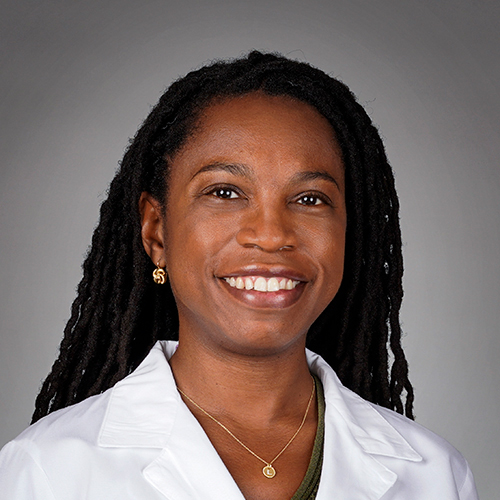
Oluwadamilola “Lola” Fayanju, MD is the Helen O. Dickens Presidential Associate Professor in the Perelman School of Medicine at the University of Pennsylvania (PENN) and Chief of the Division of Breast Surgery for the University of Pennsylvania Health System, aka Penn Medicine. She is also Surgical Director of the Rena Rowan Breast Center in the Abramson Cancer Center, Director of Health Equity Innovation at the Penn Center for Cancer Care Innovation, and a Senior Fellow in the Leonard Davis Institute of Health Economics at PENN.
Dr. Fayanju is an academic breast surgical oncologist whose research spans four areas: (1) addressing disparities and promoting equity in breast cancer presentation, treatment, outcome, and clinical trial participation; (2) improving prognostication and treatment for biologically aggressive variants of breast cancer; (3) creating value in oncologic care, especially through the collection and application of patient-reported outcomes; and (4) elucidating the importance of race and ethnicity in the conduct of research and the promotion of a diverse healthcare and medical research workforce.
She received her undergraduate degree in History and Science and an MA in Comparative Literature from Harvard University. She received her MD and a master’s of population health sciences (MPHS) from Washington University in St. Louis, where she also completed her residency in General Surgery. She completed fellowship training in Breast Surgical Oncology at The University of Texas MD Anderson Cancer Center. In 2019, she was recognized by the National Academy of Medicine as an Emerging Leader in Health and Medicine Scholar. Her research is supported by funding from the National Institutes of Health (NIH), and she has published in a variety of journals including Annals of Surgery, Cancer, and JAMA.