
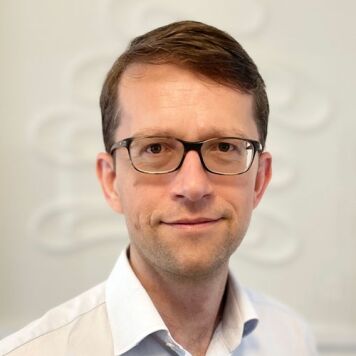
Titles and Affiliations
Head, Ralph Lauren Centre for Breast Cancer Research Breast Unit
Director, Clinical Research
Director, The Royal Marsden and Institute of Cancer Research NIHR Biomedical Research Centre
Research area
Improving prediction of the risk of recurrence of ER-positive breast cancer.
Impact
Estrogen receptor-(ER) positive breast cancer is the most common subtype of breast cancer, affecting approximately 70 percent of all people diagnosed. Many hormone therapies have been developed to target the ER in cancer cells and are given for localized, early-stage cancers along with surgery and often radiation. With these treatments, most patients are cured but some will recur. The patients who are at risk of recurrence despite hormone therapies and surgery, are often offered chemotherapy to improve the chances of cure. Tests such as the Oncotype Dx™, Prosigna™, and EndoPredict™ that can predict the risk of recurrence measure gene expression in cancer as a whole—usually from a sample of thousands to millions of cancer cells—to determine whether the cancer is more aggressive (high risk) or less aggressive cancer (low risk). The main limitations of these tests are that the specimens contain complex mixtures of different cells including tumor, immune, and many other non-cancer cells. This means that information is missing about how neighboring cells communicate with each other, as immune and normal cells in the cancer can influence how a tumor responds to treatment. The tests will also miss small areas of cancer hiding among otherwise normal cells. Some cancers recur even though the test predicts low risk, and many patients with high-risk test results don’t have a recurrence. Dr. Turner aims to improve the prediction of risk of recurrence and seeks to better understand the biology of what causes a cancer to recur.
Progress Thus Far
Dr. Turner and his team have made progress in developing and testing spatial cell technologies to gain information about the complex nature of tumors. The team is using a new technology capable of analyzing many individual cells within each cancer to analyze approximately 1,000 breast cancer samples from the ATAC trial, which tested hormone therapy in postmenopausal women. In many cases, results from OncotypeDX and Prosigna analyses are known, allowing the team to directly compare their own single-cell analysis with established prediction methods. The team has now analyzed 424 tumor samples from 360 patients. This analysis showed that a single-cell approach can separate samples into high- and low-risk categories similarly to the OncotypeDX assay, while also revealing substantial differences between cancers in their immune and normal cell populations, differences the standard tests cannot detect. The team is now positioned to complete the full analysis of 1,000 tumor samples and define precisely how immune and normal cells are organized within each cancer.
What’s next
Next, Dr. Turner and his team will be using mathematical and computational methods to build a detailed map of how individual tumor cells interact with the immune and normal cells surrounding them, including how tumor cells signal to nearby cells and how these communication patterns vary from one cancer to another. The team will then test whether these interaction patterns can help predict a patient’s risk of recurrence, potentially revealing what the standard gene expression tests are missing, such as immune cells that fail to attack cancer cells rather than actively suppressing them—information that could lead to improved, more personalized recurrence-risk tests. For patients in the study whose cancer has already returned, the team will also analyze these recurrence samples using the same approach, to understand how the cancer’s biology changed when it recurred.
Biography
Nicholas Turner, MD, PhD, FRCP, FMedSci is a Consultant Medical Oncologist who specializes in the treatment of breast cancer. He studied Natural Sciences at Cambridge University before obtaining his degree from the University of Oxford Medical School. After completing general medical training in London, he pursued studies in medical oncology at Royal Free and University College Hospitals and completed a PhD degree at The Institute of Cancer Research in 2006. He joined the Breast Unit of The Royal Marsden as a Consultant in Medical Oncology in 2008 and was elected a fellow of the Academy of Medical Sciences in 2021.
He is the Director of The Royal Marsden and ICR NIHR Biomedical Research Centre, and Director of Clinical Research at The Royal Marsden and ICR as well as Head of the Ralph Lauren Centre for Breast Cancer Research and Group Leader in Molecular Oncology at the Breast Cancer Now Research Centre at the Institute of Cancer Research (ICR). He has been awarded multiple prizes for his research including the AACR Outstanding Investigator Award for Breast Cancer Research in 2017, the AACR Team Science Award in 2022, the Pezcoller Foundation – EACR Translational Cancer Researcher Award in 2022, the ESMO award for Translational Research in 2023, and the Queen’s Anniversary Prize 2024.
Professor Turner has co-chaired the ASCO/CAP and chaired the ESMO review committees on circulating tumor DNA analysis in patients with cancer. He sits on the organizing committees of many international conferences on breast cancer, was the executive chair of the IMPAKT 2015 breast cancer conference, chair of the ESMO Breast Cancer 2025 conference, and is a scientific editor of the journal Cancer Discovery. He is Chief Investigator of a number of national and international trials of precision therapy in breast cancer, and his research interests include the development of new therapies for breast cancer and using liquid biopsies to deliver more precise treatment for breast cancer.

