
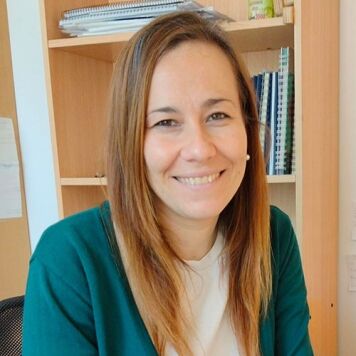
Titles and Affiliations
Associate Researcher
National Scientific and Technical Research Council (CONICET)
American Association for Cancer Research
Research Area
Targeting a protein active in triple-negative breast cancer (TNBC) to make tumors less aggressive.
Impact
Triple-negative breast cancer (TNBC) is aggressive and difficult to treat because it lacks three key proteins that are often targeted by existing breast cancer treatments. The protein ID4 is highly active in TNBC. ID4 contributes to the aggressive behavior of TNBC. Dr. Branham’s AACR research supported by BCRF focuses on reducing the activity of ID4 in TNBC to potentially reprogram tumor cells, pushing them to behave more like less aggressive types of breast cancer. This reprogramming could allow TNBC cells to become responsive to therapies currently used for other breast cancer types.
Progress Thus Far
In the first year of this project, Dr. Branham and her team found that reducing ID4 made TNBC less aggressive. In the TNBC models, cancer cells became far less able to move, invade surrounding tissue, and form new colonies, key steps in cancer spread. The team uncovered that ID4 controls not only how specialized cancer cells become, but it also controls a separate program governing their ability to migrate and spread. Analysis of large patient tumor datasets confirmed that this pathway behaves as was hypothesized based on the team’s laboratory studies. Dr. Branham and team continue to investigate the broader ID protein family to understand how these proteins may cooperate in maintaining aggressive tumor behavior.
What’s Next
Because TNBC biology is highly variable, an important goal of this project is understanding how different TNBC subtypes respond to ID4 inhibition. Having found that different subtypes follow different biological routes but share a common outcome, loss of aggressive characteristics after ID4 depletion, Dr. Branham’s team is now extending these studies to additional models to better represent the diversity of the disease. Elucidating the mechanisms by which ID4 influences TNBC biology has the potential to uncover a novel therapeutic strategy for TNBC.
Biography
Maria Teresita Branham, PhD received her undergraduate degree in Molecular Biology from the National University of San Luis in 2002. She earned her PhD in Biology with a specialization in Molecular Biology in 2010 from the PROBIOL Program at the National University of Cuyo in Mendoza, Argentina. Dr. Branham is currently an Associate Researcher at the National Scientific and Technical Research Council (CONICET), Argentina. Her research focuses on triple-negative breast cancer, exploring strategies such as epigenetic regulation and cellular reprogramming. By studying genes like ID4, she aims to identify therapeutic vulnerabilities to improve outcomes for breast cancer patients.

