

Titles and Affiliations
Assistant Attending Pathologist
American Association for Cancer Research
Research Area
Developing antibody-drug conjugates specifically for invasive lobular carcinoma.
Impact
Invasive lobular carcinoma (ILC) is the second most common type of breast cancer after the more common invasive ductal carcinoma (IDC), accounting for about 15 percent of all invasive breast cancer diagnoses. ILC has unique features compared to IDC, including metastatic spread to unusual sites such as the stomach and the ovaries, and a propensity for late distant metastatic recurrences, sometimes even 15-20 years after initial diagnosis. However, there is relatively little research being conducted exclusively in ILC and thus the reasons for these characteristics are not well understood despite its distinct biology. While antibody drug conjugates (ADC), which target proteins on cancer cells and deliver anti-cancer therapies, have been highly successful in improving breast cancer treatment and outcomes, their use has not been optimized in ILC. For her AACR research supported by BCRF, Dr. Pareja seeks to understand ADC activity in ILC, identify novel ADC targets for ILC, and ultimately develop effective ADC-based therapeutic strategies for this breast cancer subtype.
Progress Thus Far
Because not all patients respond equally well to ADCs, Dr. Pareja and her team searched for biological features that influence how well these therapies work specifically in ILC. Their studies identified differences in how ILC processes these drugs and uncovered new ADC targets that may be particularly important in this breast cancer type. The team also found that different groups of ILC tumors, categorized by the cells surrounding the tumor, have distinct biological characteristics, suggesting that different patients may benefit from different ADCs and treatment combinations. An additional and unexpected discovery was that ILC appears to have unique mechanisms controlling how cancer cells undergo cell death, identifying a new opportunity to combine ADCs with drugs that regulate cancer cells death following treatment.
What’s Next
Building on these findings, Dr. Pareja and her team will continue to investigate the biological features that influence ADC response in ILC, further characterize the newly identified ADC targets, and explore combining ADCs with cell-death-regulating drugs.Together, these studies could uncover why ILC responds differently to ADCs and guide the development of tailored, more effective treatments.
Biography
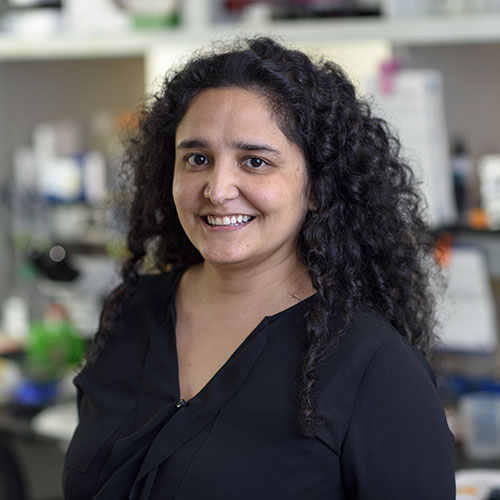
Fresia Pareja, MD, PhD is a breast pathologist and physician-scientist at Memorial Sloan Kettering Cancer Center (MSK), where she co-leads the Lobular Breast Cancer Program. She earned her MD from Universidad Católica de Santa Maria (Peru), PhD from the Weizmann Institute of Science (Israel), completed Pathology residency at New York-Presbyterian Hospital/Columbia University, and fellowship at Memorial Sloan Kettering Cancer Center. Her research explores the molecular characterization of special breast cancer subtypes, the interplay between somatic and germline alterations, and endosomal acidification in therapeutic response. She received the 2024 Ramzi Cotran Young Investigator Award from USCAP. Her work has advanced the molecular understanding and classification of breast cancer.