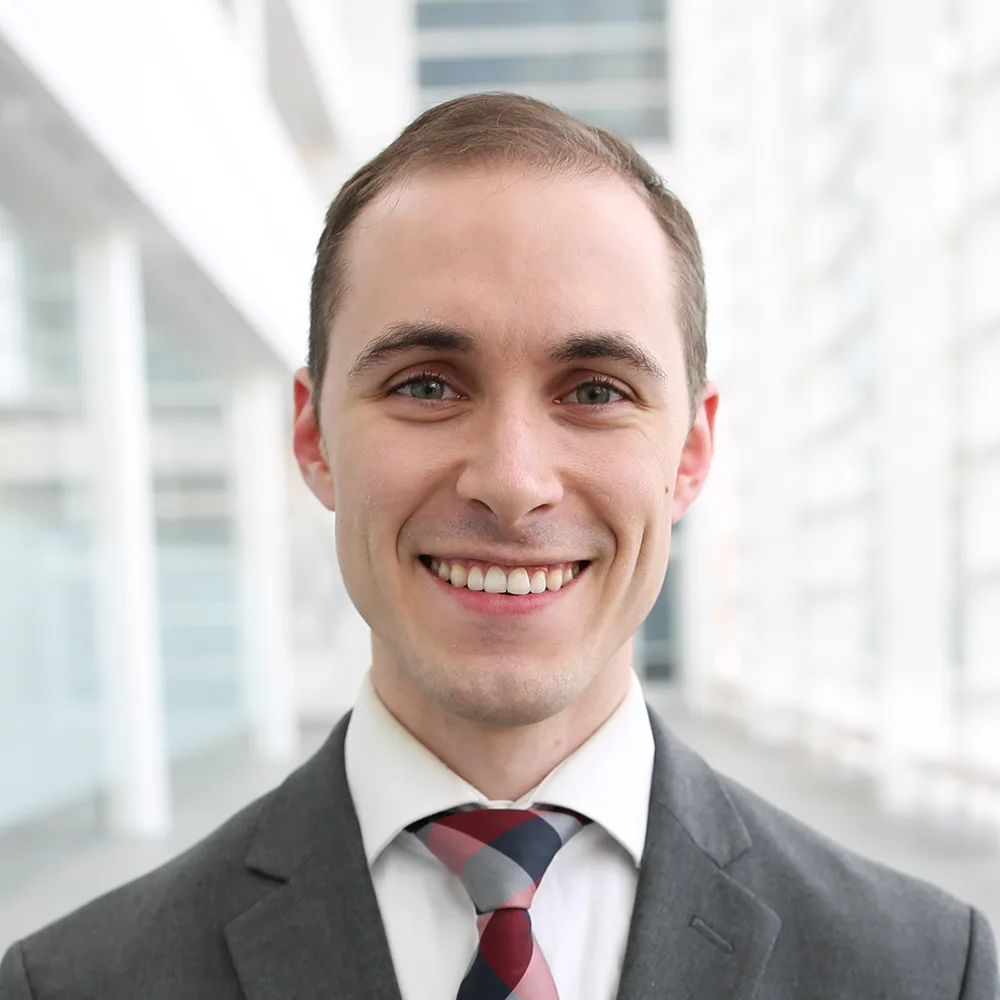
Titles and Affiliations
Fellow in Hematology and Oncology
Conquer Cancer, the ASCO Foundation
Research Area
Developing a blood test to identify which patients with metastatic breast cancer are still benefiting from CDK4/6 inhibitor therapy.
Impact
CDK4/6 inhibitors — oral pills taken at home, often with fewer side effects than chemotherapy — have transformed care for many patients with hormone receptor (HR)-positive metastatic breast cancer, allowing them to keep working, caring for family, and living their daily lives. But many patients eventually see their cancer start growing again, forcing a difficult choice: stay on CDK4/6 inhibitors with a new hormone-blocking therapy, or move toward chemotherapy, with more clinic visits and a bigger impact on quality of life. Current tools, like imaging scans, are typically done only every few months, so it can take weeks or months before doctors know a treatment has stopped working — time during which patients may stay on a therapy that’s no longer helping. For his Conquer Cancer research supported by BCRF, Dr. Kristoff is testing whether a simple blood test could give answers much sooner.
What’s Next
Using samples from a large clinical trial called postMONARCH (NCT05169567), Dr. Kristoff will track a blood marker called serum thymidine kinase activity (sTKa) before and after treatment. This marker increases when tumors are actively growing, indicating it may be an early signal that the CDK 4/6 inhibitor has stopped working. The goal is to see whether sTKa can predict which patients will still benefit from the CDK4/6 inhibitor abemaciclib (Verzenio®), even after their cancer progressed on a prior CDK4/6 inhibitor. A positive result could lead to a widely available test that helps patients avoid treatments that are no longer working.
Biography
Tyler J. Kristoff, MD, is a hematology and medical oncology fellow at Emory University School of Medicine and a member of the Winship Cancer Institute. He completed his internal medicine residency at Emory, where he received a distinction in medical innovation, and earned his medical degree from Case Western Reserve University School of Medicine. Dr. Kristoff’s research focuses on improving outcomes for patients with hormone receptor positive, HER2-negative metastatic breast cancer through biomarker-driven treatment strategies. His work centers on identifying clinically actionable biomarkers, including serum thymidine kinase activity, to guide therapeutic decision-making, particularly in the setting of resistance to CDK4/6 inhibitors.