
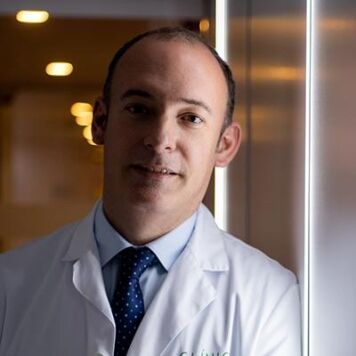
Titles and Affiliations
Head of the Medical Oncology Department, Hospital Clinic Barcelona
Head Translational Genomics and Targeted Therapeutics in Solid Tumors Group
Professor and Director, Chair of Innovation in Precision Oncology
University of Barcelona
Research area
Identifying biomarkers for predicting treatment response in early-stage hormone receptor-positive breast cancer.
Impact
Endocrine therapy following surgery is effective in reducing the risk of breast cancer recurrence of breast cancer in patients with hormone receptor (HR)-positive, HER2-negative early-stage breast cancer. However, recurrences still occur, particularly in patients at intermediate or high risk of recurrence. Often recurrences present as incurable metastases distant from the primary tumor site. Identifying improved treatment strategies for patients who are at high risk of recurrence and reducing unnecessary treatment for patients at low risk of recurrence is critical to improving the treatment of early-stage HR-positive, HER2-negative breast cancer. Dr. Prat is conducting the RIBOLARIS trial, an international study that aims to provide essential data needed to refine and optimize treatment for HR-positive, HER2-negative breast cancer.
Progress Thus Far
The RIBOLARIS trial assesses whether chemotherapy can be avoided for patients with initial high-risk breast cancer that are converted to low risk following neoadjuvant endocrine therapy plus CDK4/6 inhibitor treatment. This low-risk cohort will continue to receive the same treatment following surgery. Those who remain at high risk of recurrence will receive chemotherapy in addition to endocrine therapy and a CDK4/6 inhibitor. Dr. Prat and his team are analyzing genetic markers in tumor samples before and after treatment to potentially identify biomarkers that predict response to the CDK4/6 inhibitor. Initial findings from the study reveal distinct patterns in gene expression before and after treatment that were linked to better response to CDK4/6 inhibitor and hormone therapy. Additionally, after treatment with chemotherapy, the team observed an increase in immune-related genes and a decrease in genes that drive cell proliferation.
What’s next
Building on key findings from prior work, in the next year, Dr. Prat and his team plan to focus on tertiary lymphoid structures (TLSs)—organized clusters of immune cells that act like mini lymph nodes inside tumors. They aim to characterize TLSs in detail, including using advanced imaging and genomic techniques to identify immune cell types within TLSs and assess how their composition influence patient outcomes and treatment response. Dr. Prat and his team plan to test the clinical value of TLSs, evaluating whether features and related immune gene signatures can predict response to therapy and long-term outcomes in patients with early and metastatic breast cancer. The long-term goal is to integrate TLS assessment into routine clinical practice to better guide treatment decisions in breast cancer.
Biography
Aleix Prat, MD, PhD is a medical oncologist and serves as Head of the Medical Oncology Department at the Hospital Clinic Barcelona, Head of Translational Genomics and Targeted Therapeutics in Solid Tumors Group at Institut d’Investigacions Biomèdiques August Pi i Sunyer, and Professor and Director, Chair of Innovation in Precision Oncology at the University of Barcelona.
He obtained his medical degree from the University of Barcelona and completed an oncology fellowship under the guidance of Dr. Jose Baselga at Hospital Vall d’Hebron where he was a co-investigator in a number of complex phase I-III clinical trials. Subsequently, Dr. Prat was a research associate at the University of North Carolina at Chapel Hill (USA) in Dr. Charles Perou’s laboratory and then completed his PhD in Medicine at the University of Barcelona. Upon completion of his postdoctoral studies, Dr. Prat returned to Barcelona as a faculty member and independent laboratory investigator at the Vall d’Hebron Institute of Oncology.
In his current role, Dr. Prat focuses his research on the advancement of precision medicine to optimize treatment regimens for patients. Specifically, he is interested in defining methods to leverage genomic data to guide clinical trial design and biomarker development as well as to determine molecular mechanisms involved in drug sensitivity.
Dr. Prat has authored over 219 peer-reviewed papers and, in 2012, received the International Award for Breast Cancer Research. He has served as a Scientific Coordinator for SOLTI (a Spanish breast cancer cooperative group), a Member of the Executive Committee of The Breast International Group (BIG) and assumed the Presidency of the Board of Directors of SOLTI in May 2019.

