

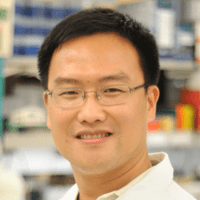
Titles and Affiliations
Professor, Department of Molecular and Cellular Biology
William T. Butler Endowed Chair for Distinguished Faculty
Director, Basic Science Research
Lester and Sue Smith Breast Center
Research area
Investigating how chemotherapy affects the immune system’s ability to fight triple-negative breast cancer and identifying new ways to restore healthy immune function after treatment.
Impact
Aggressive breast cancers such as TNBC can weaken the body’s immune system in ways that extend well beyond the tumor itself. While immunotherapies have improved outcomes for some patients, many do not benefit because their immune systems are suppressed through mechanisms that are not yet fully understood. Dr. Zhang and his colleagues have found that tumors can reprogram the immune cell repertoire to be immune suppressive by “communicating” with the bone marrow—the tissue that produces blood and immune cells—even before cancer spreads. Standard chemotherapy kills cancer cells and certain immune-suppressing cells, but it appears to spare the early precursor cells in the bone marrow that give rise to the immune-suppressing cells. This means that after treatment ends, the body may rapidly regenerate a new wave of immune-suppressive cells, potentially allowing the cancer to return. Understanding this process could help explain why some patients relapse even after successful initial therapy.
What’s next
In the coming year, Dr. Zhang’s team will study how chemotherapy interacts with these tumor-altered precursor cells in the bone marrow and determine the mechanism whereby they continue to give rise to harmful, immune-suppressing cells after treatment ends. The team will track how these cells behave before, during, and after chemotherapy, and test whether the immune cells they produce continue to suppress anti-cancer immune responses. By uncovering how tumors and their treatments reshape the immune system together, this research aims to identify new strategies to restore healthy immune function and improve long-term outcomes for patients with breast cancer.
Biography
Xiang (Shawn) Zhang, PhD is a Professor in the Department of Molecular and Cellular Biology, the William T. Butler Endowed Chair for Distinguished Faculty, and the Interim Director of Basic Research at the Lester and Sue Smith Breast Center of Baylor College of Medicine in Houston, Texas. Dr. Zhang continues to investigate biological mechanisms and therapeutic strategies of breast cancer metastasis and has made several findings using an integrative strategy that combines cancer genomics and experimental metastasis approaches. His long-term goals are to eradicate latent cancer cells in distant organs, and to reduce the incidence of overt metastases.
He received his PhD degree from Columbia University under the mentorship of Dr. Lawrence Chasin where he focused on the biology of mRNA splicing. He then joined Dr. Joan Massague’s laboratory at Memorial Sloan Kettering Cancer Center, where he began to study cancer metastasis.
Dr. Zhang is the recipient of several prestigious awards: Laura Ziskin Translational Research Award of Breast Cancer (2022), Michael E. DeBakey Excellence in Research Award, Baylor College of Medicine (2018), Sue Eccles Young Investigator Award, Metastasis Research Society (2018), Leadership Award, Teresa Research Foundation (2016), Excellence in Research Award, Baylor College of Medicine (2016), Era of Hope Scholar Award, Department of Defense, Breast Cancer Research Program (2015), Career Catalyst Research Award, Susan G. Komen Foundation (2015). He is also an awardee of the K99/R00 Pathways to Independence Grant from the National Cancer Institute.
“If not for BCRF, our high-risk research uncovering how tumors reshape immunity would not exist. Their brave support drives discoveries that bring new hope to breast cancer patients.”

