
Titles and Affiliations
Professor of Medicine
Harvard Medical School
Chief and Director, Division of Gynecologic Oncology
Research area
Developing new therapeutic strategies for breast and gynecologic cancers.
Impact
There is significant unmet therapeutic need for the two most common gynecologic cancers in the United States, ovarian and endometrial. These cancers have genetic overlap with certain types of breast cancer driven by mutations in the BRCA genes. Breast cancer survivors are at risk for these cancers because of inherited high-risk BRCA mutations, rising incidence of endometrial cancer in the United States, and increased risk of endometrial cancer caused by certain breast cancer treatments such as tamoxifen. PARP inhibitors, which are approved for BRCA-induced cancer, are not beneficial to all patients and tumors eventually develop resistant to the treatment. Drs. Matulonis and Konstantinopoulos are developing combination therapies that may act synergistically to provide better treatment outcomes for patients with breast or gynecological cancers.
Progress Thus Far
Drs. Matulonis and Konstantinopoulos have multiple clinical trials in progress testing new treatment strategies. To support this work, the team has developed and continues to expand a set of preclinical platforms that allow the team to test new treatments and understand why a given therapy does or does not work.
The team has reported several important clinical trial findings in gynecologic cancers. A phase 2 trial, RESOLVE, testing a three-drug combination (abemaciclib, letrozole, and metformin) in women with recurrent endometrial cancer showed promising results, with about one-third of patients responding to treatment, including some experiencing a complete response. This combination was developed based on breast cancer treatment strategies, underscoring the value of the genetic overlap between these diseases.
A large phase 3 trial, EPIK-O, tested a combination of two targeted drugs, olaparib and alpelisib, in ovarian cancer that had stopped responding to chemotherapy. While the trial overall did not show a benefit compared to standard options, a subset of patients whose tumors had specific genetic changes did seem to benefit, pointing to future precision medicine approaches.
What’s next
In the upcoming year, Drs. Matulonis and Konstantinopoulos will build from these findings to better personalize treatment for women with gynecologic cancers. Follow-up studies of the RESOLVE trial will explore how best to use the three-drug combination and identify which patients are most likely to benefit. Building on the results from the EPIK-O trial, the researchers will dig deeper into genetic testing to confirm which tumor subtypes respond to the olaparib and alpelisib combination, with the goal of designing future precision medicine trials. Several additional clinical trials are planned or underway for both ovarian and endometrial cancer and the team anticipates that several of these trials will either complete enrollment or finish the first stage of a two-stage trial design this year.
Biography
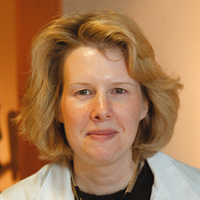
Ursula A. Matulonis, MD, is Chief and Director of the Division of Gynecologic Oncology at the Dana-Farber Cancer Institute and Professor of Medicine at Harvard Medical School. She is the first recipient of the Brock-Wilson Family Chair at the Dana-Farber Cancer Institute. She co-leads the ovarian cancer program within the Dana-Farber/Harvard Cancer Center. Her research focuses on developing new targeted therapies for gynecologic malignancies, with a specific interest in ovarian cancer and endometrial cancer.
Dr. Matulonis has led several PARP inhibitor, anti-angiogenic agent, immunotherapy, and combination trials for ovarian cancer in the United States and internationally. Dr. Matulonis serves on the Massachusetts Ovarian Cancer Task Force, the NRG ovarian committee, and the Scientific Advisory Board for the Ovarian Cancer Research Foundation and the Clearity Foundation. She received the Dana-Farber Dennis Thompson Compassionate Care Scholar award, the Lee M. Nadler “Extra Mile” Award, the Clearity Foundation award, and the Zakim Award at Dana-Farber for patient advocacy.
After receiving her MD from Albany Medical College, she completed an internship and residency at the University of Pittsburgh, followed by a medical oncology fellowship at the Dana-Farber Cancer Institute in Boston, MA.