
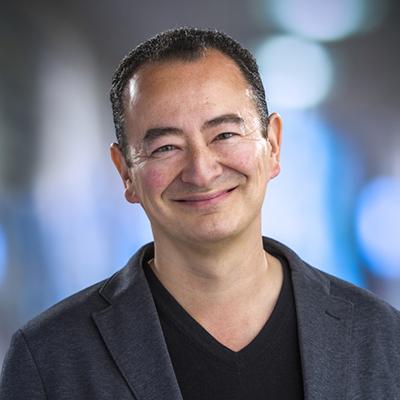
Titles and Affiliations
Professor, Public Health Sciences Division
Vice President, Faculty Affairs and Diversity
Helen G. Edson Endowed Chair for Breast Cancer Research
Associate Director, Diversity, Equity, and Inclusion
Fred Hutch/University of Washington Cancer Consortium
Research area
Improving outcomes for patients with luminal B breast cancer by identifying which patients are at a high risk of recurrence.
Impact
Existing risk prediction tools like Oncotype DX® are immensely helpful for guiding treatment strategies for many newly diagnosed breast cancer patients. For example, patients with a high Oncotype DX® score are those with an elevated risk of recurrence, and chemotherapy is recommended for those patients. Patients with a low score have a low risk of recurrence and can safely forgo chemotherapy, avoiding its side effects. However, Oncotype DX® was primarily developed and assessed among patients with a subtype of breast cancer known as luminal A, whereas luminal B breast cancers, considered potentially more aggressive than luminal A, are without these tools. Dr. Li and his team will leverage archived tumor tissue from a large clinical study that included different subtypes of breast cancer to develop a new risk prediction model for luminal B breast cancer.
Progress Thus Far
Dr. Li’s approach is to perform deep molecular and genetic characterization of tumor tissue samples from patients who did and did not have a breast cancer recurrence. He and his colleagues have finalized a set of 214 patients—102 who experienced a subsequent recurrence and 112 who have not—consisting of 92 triple-negative (TNBC), 52 luminal A, and 70 luminal B breast cancer samples. Using a spatial proteomics platform capable of mapping individual cells within a tumor, the team has now evaluated these samples, allowing them to study not just the cancer cells themselves, but the surrounding mix of cell types and how these cellular neighborhoods relate to outcomes. Among luminal B patients specifically, the team found that a higher proportion of cells in what they term the “immune-infiltrating tumor zone,” a mixture of immune and tumor cells, was associated with a greater risk of recurrence, a finding that could eventually help flag which luminal B patients need closer monitoring or more aggressive treatment. The team continues to identify additional spatial features linked to recurrence risk using newly developed analytical methods suited to this rapidly evolving field.
What’s next
In the coming year, Dr. Li and his team will examine how proximity and interaction between different cell types relates to recurrence risk, while validating their findings and pinpointing the most informative features. In parallel, the team is performing genetic characterization of tumor tissue, leveraging a large prospective cohort of 3,904 breast cancer patients with more than 15 years of follow-up to identify new driver mutations and inherited genetic variants associated with recurrence across breast cancer subtypes.
Biography
Christopher Li, MD, PhD completed his medical degree at the University of California, San Francisco and his PhD in Epidemiology at the University of Washington. He is the Vice President for Faculty Affairs and Diversity at the Fred Hutchinson Cancer Center and the Associate Director for Diversity, Equity, and Inclusion of the Fred Hutch/UW/Seattle Children’s Cancer Consortium (an NCI-designated Comprehensive Cancer Center). He holds the Helen G. Edson Endowed Chair for Breast Cancer Research and is a full professor at the Fred Hutchinson Cancer Research Center and a research full professor in the Department of Epidemiology at the University of Washington.
Dr. Li’s research spans breast and colorectal cancer early detection, screening, etiology, and survivorship. His work has identified novel risk factors related to the development of cancer and has evaluated the molecular features of cancer that are associated with poor outcomes. He also investigates the causes of disparities in cancer incidence, treatment, and mortality. Additionally, Dr. Li co-leads the NCI-funded SEER cancer registry serving western Washington state and Fred Hutch’s NCI-funded Population-based Research to Optimize the Screening Process (PROSPR) consortium Coordinating Center focused on improving screening for cervical, colorectal, and lung cancers.