Titles and Affiliations
Warner-Lambert/Parke-Davis Professor of Molecular Biology
Research area
Targeting metastatic breast cancer at the nexus of cancer progression and immune response.
Impact
Metastatic breast cancer (MBC)—when breast cancer spreads to other organs—is incurable and responsible for the majority of breast cancer deaths. Dr. Kang and his team discovered a link between a protein, metadherin (MTDH), and MBC. It is expressed by many breast tumors, and its presence predicts poor outcome for patients. The team found that MTDH promotes both metastasis and chemotherapy resistance in cancer cells and helps tumors evade the immune system, making it a promising target for therapy. Dr. Kang’s team is exploring whether blocking MTDH could help promote an anti-tumor response by the immune system. The findings from this research may lead to a new immunotherapy approach for metastatic breast cancer.
Progress Thus Far
Dr. Kang and his team previously identified a link between fat metabolism in the liver and the strength of the immune system in fighting breast cancer. In their current laboratory studies, they observed that MTDH does not only act within tumor cells, it also disrupts normal function in the liver and immune system more broadly. By engineering advanced breast cancer models, they have found that blocking MTDH in both immune and liver cells, the immune cells, especially cancer-fighting CD8+ T cells, become more capable of attacking tumors. These immune cells show improved energy production and survival, which translates into stronger antitumor responses. Using advanced technologies and laboratory models of metastatic disease, the team developed a liver-targeted therapy that reduced tumor-related fatty liver changes and significantly improved how well tumors responded to an immunotherapy drug. The combination led to complete, long-term remission in some models.
What’s next
Dr. Kang and his team will investigate how MTDH interacts directly with RNA to control gene activity that helps tumors evade the immune system. Using newly developed tools, they will map these interactions across tumor cells, liver cells, and immune cells, and test how disrupting them affects tumor growth, spread, and response to immunotherapy. Their goal is to develop a treatment strategy that not only targets the tumor but also disrupts the broader support network that helps metastatic breast cancer thrive, offering hope for more effective immunotherapy for patients with metastatic disease.
Biography
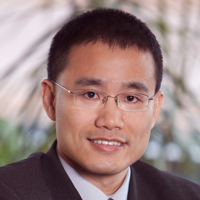
Yibin Kang is Warner-Lambert/Parke-Davis Professor of Molecular Biology and American Cancer Society Research Professor at Princeton University. He graduated from Fudan University in Shanghai in 1995. After completing his graduate study at Duke in 2000, Dr. Kang became an Irvington Institute postdoctoral fellow with Dr. Joan Massagué at Memorial Sloan Kettering Cancer Center and pioneered a functional genomic approach to elucidate mechanisms of breast cancer metastasis. Dr. Kang joined the faculty of Princeton University as an Assistant Professor of Molecular Biology in 2004. He was promoted to Associate Professor with tenure in 2010 and to Endowed Professor in 2012.
Dr. Kang’s research focuses on the molecular mechanisms of breast cancer metastasis. His laboratory discovered new genes that promote recurrence, metastasis and chemoresistance of breast cancer, delineated tumor-stromal interactions that are essential for metastatic growth, and identified novel regulators with dual functions in mammary gland cell fate determination and tumor progression. Dr. Kang has published over 100 original articles in leading journals including Cell, Cancer Cell, and Nature Medicine. Dr. Kang’s outstanding achievements have been recognized by many awards, including a Department of Defense Era of Hope Scholar Award (2006), the 2011 Vilcek Prize for Creative Promise in Biomedical Sciences (2011), the AACR Award for Outstanding Achievements in Cancer Research (2012), the Fidler Innovation Award from the Metastasis Research Society (2014) and the Fuller Albright Award from the American Society for Bone and Mineral Research (2014). Dr. Kang was elected as President of the Metastasis Research Society for the 2016-2018 term.