
Titles and Affiliations
Professor of Medicine
Member and Lab Head, Human Oncology and Pathogenesis Program
Director, Developmental Research Program, MSK Breast SPORE
Section Head for Translational Research, Breast Service, Department of Medicine
Member, BCRF Scientific Advisory Board
Research area
Deciphering the underlying biology of drug resistance to improve patient response to targeted therapies.
Impact
Advances in cancer therapy have been a major contributor to the decline in breast cancer deaths over the last three decades. Even with these advances, however, breast cancers have the ability to evolve, adapt, and become resistant to drugs, resulting in tumor growth and metastasis to distant sites in the body, an uncurable stage of the disease. Dr. Chandarlapaty is focusing on understanding why treatments that initially are effective against breast cancer become ineffective over time and developing new approaches to prevent or overcome drug resistance.
Progress Thus Far
Dr. Chandarlapaty and his team have made progress in understanding how breast cancer develops resistance to several common therapies, including hormonal therapies, anti-HER2 therapies and CDK4/6 inhibitors, a class of drugs commonly used to treat estrogen receptor (ER)-positive breast cancer. Among their discoveries, they found that a set of proteins called APOBEC3 enzymes known to play a role in immune response are a frequent cause of drug resistance in breast cancer. Drugs that block the activity of these enzymes could help prevent relapse. This work has also revealed a growing ability to predict resistance before it develops, an insight the team hopes to use to guide earlier, more targeted intervention.
What’s next
Dr. Chandarlapaty and his team will test an alternative sequence of two therapies designed to overcome resistance and will develop a trial testing combinations of antibody drug conjugates (ADCs), a drug class that has proven effective in treating breast cancer but can also lose effectiveness over time. The team will also work to develop new class of drugs to help prevent resistance to hormone therapy. Their results will help move us closer to more effective treatments that can block tumor evolution and prevent the development of drug resistance.
Biography
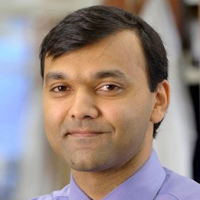
Sarat Chandarlapaty, MD, PhD, is an Associate Attending medical oncologist and a Laboratory Head in the Human Oncology and Pathogenesis Program at Memorial Sloan Kettering Cancer Center. He earned his medical degree at the Wake Forest School of Medicine and his PhD at the University of North Carolina. Dr. Chandarlapaty completed his residency at New York Presbyterian Hospital, and his fellowship at Memorial Sloan Kettering Cancer Center. A major focus of his work has been to characterize the significance of alterations present in metastatic tumors that have progressed following targeted therapies such as antiestrogens or CDK4/6 inhibitors, as well as to develop models of resistant cancer for testing newer therapeutic strategies.