

Titles and Affiliations
Director, Simmons Comprehensive Cancer Center
Associate Dean for Oncology Programs
Professor of Internal Medicine
Research area
Developing new approaches to combat drug resistance and improve clinical outcomes.
Impact
About 70 percent of breast cancer cases are estrogen receptor (ER)-positive, meaning the cancer cells require estrogen to grow. ER-positive metastatic breast cancer (MBC) remains the most common subtype of breast cancer. For these patients, standard treatments include anti-hormone therapies that block estrogen and CDK4/6 inhibitors (CDK4/6i), which markedly arrest cancer cell growth. While CDK4/6i combined with anti-ER therapy have significantly improved survival, this disease remains incurable due to the emergence of drug resistance. Resistance happens because a small number of cancer cells manage to survive treatment and later grow back, sometimes despite continuous therapy. Dr. Arteaga aims to understand how this cell population survives to ultimately target and eliminate these cells.
Progress Thus Far
Over the past year, Dr. Arteaga made strides in uncovering how ER-positive breast cancer cells survive treatment with CDK4/6i. Using advanced single-cell sequencing, he and his team discovered that a small group of drug-tolerant persister (DTP) cells divides into many distinct subpopulations, each with different gene activity patterns. Notably, they found that activation of the Wnt signaling pathway—a molecular communication system that helps cells grow and survive—was a consistent feature of DTPs in two different ER-positive breast cancer cell models. To better understand how these persister cells evolve, the team introduced unique DNA “barcodes” into cancer cells, allowing them to track individual cell lineages over time during drug treatment. This revealed that while some cell populations shrank or disappeared, others expanded and formed new clusters with specific gene activity signatures. Together, these findings suggest that certain pathways, like Wnt signaling, may be critical for persister cells to survive and eventually fuel drug resistance. The team is also investigating the Notch signaling pathway, , alongside Wnt, as another potential mechanism helping these drug-tolerant cells stay alive.
What’s next
Next, Dr. Arteaga’s team will pursue two main goals. First, they will confirm their finding in laboratory models and breast tumor samples from patients undergoing treatment with CDK4/6 inhibitors. Second, using breast cancer cell lines, patient-derived organoids, and laboratory models, the team will establish whether Wnt and Notch signaling directly cause persister cells to survive, work that will clarify whether blocking these pathways could meaningfully prevent relapse. These studies aim to pinpoint actionable weaknesses in persister cells, paving the way for combination therapies that could stop resistance before it takes hold.
Biography
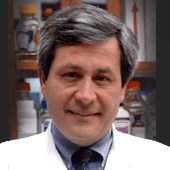
Dr. Arteaga is Professor of Medicine and Director of the Simmons Cancer Center at University of Texas, Southwestern Medical Center. He was formally Associate Director for Clinical Research, Director of the Breast Cancer Program, and Director of the Center for Cancer Targeted Therapies at the Vanderbilt-Ingram Cancer Center, where he also held the Donna S. Hall Chair in Breast Cancer Research and Professor of Medicine and Cancer Biology. Dr. Arteaga trained in Internal Medicine and Medical Oncology at Emory University and the UT Health Sciences Center San Antonio, respectively. He has over 250 publications in the areas of signaling by growth factor receptors and oncogenes, targeted therapies and biomarkers of drug resistance, and investigator-initiated clinical trials in breast cancer. Since 2002, he has directed the NCI-funded Vanderbilt Breast SPORE. He is a member of the ASCI and the Association of American Physicians. He received the AACR Richard & Hinda Rosenthal Award, a 2007-2017 ACS Clinical Research Professor Award, the 2009 Gianni Bonadonna Award from ASCO and the 2011 Brinker Award from the Susan G. Komen Foundation. He has served as AACR co-chair of the annual San Antonio Breast Cancer Symposium since 2009. He is Deputy Editor of Clinical Cancer Research and member of the Editorial Board of Cancer Cell and six other peer-reviewed journals. He is immediate past President of the AACR in 2015.
Through our research, we are committed to making a big difference in the lives of women with breast cancer and/or at risk of the disease. If not for BCRF, we may not have such an opportunity. Thus, my sincere thanks to the BCRF for their support and partnership in our fight to end breast cancer as we know it.

