

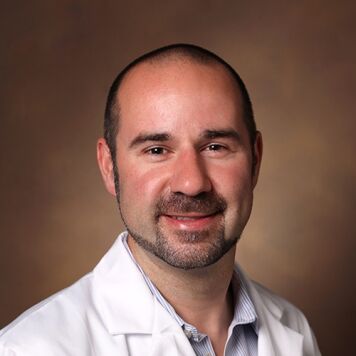
Titles and Affiliations
Ingram Associate Professor for Cancer Research
Associate Professor of Medicine and Pathology, Microbiology & Immunology
Co-Leader Breast Cancer Research Program
Vanderbilt Ingram Cancer Center
Research area
Developing methods to identify which patients would benefit from immunotherapy.
Impact
Triple-negative breast cancer (TNBC) is an aggressive subtype of breast cancer. Because these tumors lack estrogen and progesterone receptors and the HER2 protein, three factors that are usual targets of therapy, there are limited treatment options beyond chemotherapy. Immunotherapy in combination with chemotherapy has achieved some success, but only in about 15 percent of patients with TNBC. The use of immunotherapy drugs is also complicated by potentially life-long side effects including those similar to symptoms of autoimmune disorders. Dr. Balko and his team are running a clinical trial to test a method to identify patients most likely to benefit from the addition of immunotherapy. They hope its use will help improve and personalize treatment in a population of patients that currently has limited options.
Progress Thus Far
Dr. Balko and his team have completed enrollment and full tissue analysis for the group of 80 patients with early-stage TNBC. Enrollment for the metastatic TNBC group is nearing completion.
What’s next
Dr. Balko and his team will complete enrollment and data collection for the metastatic TNBC group. From the wealth of tumor data they assemble and analyze across both groups, the team hopes to identify the biological reasons why immunotherapy helps some patients with TNBC but not others, insights that could be used to design better clinical trials and improve outcomes for patients with this aggressive disease.
Biography
Justin M. Balko, PharmD, PhD is currently an Ingram Associate Professor of Cancer Research and Associate Professor of Medicine and Pathology, Microbiology, and Immunology, and co-leads the VICC Breast Cancer Research Program. He obtained his Doctorate in Pharmacy from the State University of New York at Buffalo in 2004. After completion of his PhD in the Clinical and Experimental Therapeutics track of the Pharmaceutical Sciences program at the University of Kentucky in Lexington, KY, he joined the laboratory of Carlos L. Arteaga, MD, in 2009 as a postdoctoral research fellow.
He has published over 100 peer reviewed contributions in the field of molecular oncology and translational oncology research, primarily in the breast cancer field. His laboratory focuses on identifying biomarkers and mechanisms of drug sensitivity or resistance in breast cancer and other tumor types, ways to enhance response rates to immunotherapy by targeting cancer-specific signals of immune suppression, and the biological mechanisms of immune-related adverse events to immunotherapies. His laboratory receives or has received funding from the NIH/NCI, the Department of Defense, The IBC Network Foundation, the Jimmy V Foundation for Cancer Research, The Mary Kay Foundation, Stand Up 2 Cancer/AACR, and Susan G. Komen.

