

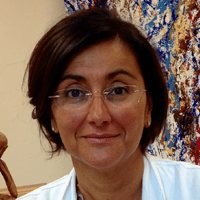
Titles and Affiliations
Director, Sandro Pitigliani Department of Medical Oncology
Director, Breast Center
Research area
Identifying biomarkers to improve the clinical management of hormone receptor-positive/HER2-positive breast cancer.
Impact
Approximately half of HER2-positive breast cancers also express hormone receptors (HR). However, chemotherapy in combination with anti-HER2 therapy is generally the treatment of choice and hormonal therapy as a secondary choice, irrespective of HR status. Since chemotherapy has several adverse side effects, researchers are looking for ways to decrease its use by identifying biomarkers that can predict which patients will benefit, and those that will benefit from alternative strategies. Recent evidence has indicated that hormone receptor, HER2 protein, and the signaling pathway activated by CDK4/6 kinases largely cooperate to facilitate tumor growth—this suggests that CDK4/6 kinase inhibitors may be an effective chemotherapy-free alternative. Dr. Biganzoli and her colleagues have identified unique patterns of gene expression called gene signatures which may predict sensitivity to estrogen therapy plus chemotherapy or CDK4/6 inhibitors in patients with estrogen receptor-positive/HER2-positive (triple-positive) breast cancer. In collaboration with the International Breast Cancer Study Group, Dr. Biganzoli is leveraging tissue collected from participants in the TOUCH trial (NCT03644186) to correlate gene signatures with treatment response. The results of her studies will inform treatment decisions for patients with HR-positive/HER2-positive breast cancer and ultimately improve outcomes for these patients.
Progress Thus Far
TOUCH is the first randomized clinical trial to directly compare chemotherapy versus the combination of estrogen with a CDK4/6 inhibitor (palbociclib) in patients with HR-positive,HER2-positive early breast cancer also receiving state-of-the-art anti-HER2 blockade. The trial accrued its target of 147 patients but did not meet its primary biomarker objective. The investigators did, however, report a significant finding: patients in both treatment groups achieved complete remission of the breast tumor in roughly one-third of cases—suggesting that a chemotherapy-free approach warrants further investigation for triple-positive breast cancer. The team also demonstrated that these tumors are deeply biologically heterogeneous, making biomarker development particularly challenging. To decode this complexity, Dr. Biganzoli and her team have begun applying spatial transcriptomics—a cutting-edge technology that maps gene activity directly within tumor tissue—to 40 pre-treatment biopsies from TOUCH patients, covering both treatment arms and both responding and non-responding tumors.
What’s Next
In the next year, Dr. Biganzoli and her colleagues will expand their sample size to a total of 70, making this one of the first datasets of spatial transcriptomic data for HR-positive/HER2-positive early BC. They will work to complete the tumor sequencing and spatial transcriptomics analyses. Their analysis will likely yield unique insights into the biology of HR-positive/HER2-positive tumors, including drug resistance, that may enhance treatment decision-making and improve outcomes for these patients.
Biography
Laura Biganzoli, MD is the Director of the Breast Center at the Hospital of Prato, Istituto Toscano Tumori, Prato, Italy. She earned her medical degree at the University of Pavia, Italy, and completed fellowships at the National Cancer Institute of Milan and at the Jules Bordet Institute in Brussels. For five years she worked as a senior staff member at the Medical Oncology Clinic of the Jules Bordet Institute. She is board certified in medical oncology and internal medicine.
Her current research focuses on breast cancer and geriatric oncology. Dr. Biganzoli was the Director of the European Organization for Research and Treatment of Cancer (EORTC) Investigational Drug Branch for Breast Cancer, dedicated to the conduction of early phase II studies in advanced breast cancer, for five years and sat on the Board of Directors of the Breast International Group (BIG) from 1999 to 2003. Dr. Biganzoli has been a member of the European Society of Breast Cancer Specialists (EUSOMA) Executive Committee since 2011 and European Society of Medical Oncology (ESMO) Faculty Member for the Elderly since 2012. She is part of the International Society of Geriatric Oncology (SIOG) Science & Educational Committee.

