
Understanding Breast Cancer Diagnosis: Symptoms, Tests, and Early Detection

Learn about what goes into making a breast cancer diagnosis, including what to expect during exams, imaging, and biopsies. Plus, learn to do next if you are diagnosed.
Every two minutes, a woman in the U.S. receives a breast cancer diagnosis. For some, it explains a lump or symptom they’ve been worried about. For others, it comes as a complete surprise after a routine screening uncovers something abnormal. No matter the circumstances, the moment is life-changing.
Despite how common the disease is—affecting about one in eight women in the U.S.—many people don’t know what a breast cancer diagnosis actually entails. And once the results arrive, it can be difficult to make sense of them and the next steps.
Here, we explain how doctors diagnose breast cancer and use the results to guide treatment recommendations.
How is breast cancer typically diagnosed?
The process of getting a breast cancer diagnosis can be slightly different from one person to the next. For some, it starts with noticing a symptom—like a lump or nipple discharge—and bringing it to a doctor’s attention. For others, it begins when a medical professional spots something abnormal during a routine screening or a visit to a gynecologist.
Doctors generally confirm a diagnosis of breast cancer in the following steps:
1. Initial consultation and medical history review
If you find a lump in your breast or experience other signs of breast cancer, you’ll first have an initial consultation with an OB-GYN or general practitioner. They’ll ask about your symptoms and when you first noticed them. They’ll also review your personal and family medical history of cancer. This can help determine your overall risk for the disease and if you have inherited risk factors.
2. Physical breast exam
Doctors also use physical breast exams as part of the process of diagnosing breast cancer. This involves looking for changes in the skin or nipple. They will also palpate (feel) the breasts, underarms, and collarbone area with their finger pads to check for lumps and abnormalities. If they find anything suspicious, they will make note of it and recommend diagnostic tests to investigate the cause. A physical breast exam usually takes 10 minutes or less.
3. Imaging tests
Imaging tests are a key part of a breast cancer diagnosis. For many people, the first sign of breast cancer is on a screening mammogram, a routine X-ray imaging test that can uncover abnormalities before they can be felt. Doctors may also order other imaging tests—such as ultrasound or breast MRI—for certain reasons, such as if they feel a potentially malignant (cancerous) lump in a patient’s breast, if the person has dense breasts or implants, or if the person has a BRCA mutation.
Here are the most common imaging tests for breast cancer:
- Diagnostic mammogram: Compared to a routine screening mammogram, a diagnostic mammogram involves taking more images of the breast to get a better view of suspicious areas. It may take longer than a screening mammogram, but the results are available much more quickly—usually in real time or the same day.
- Breast ultrasound: This test uses sound waves to create images of breast tissue and is often used to distinguish between solid masses (which can be cancerous) and fluid-filled cysts (which are typically benign). During a breast ultrasound, a healthcare professional moves a handheld device called a transducer over the breast and nearby tissue. It usually takes about a half hour. The radiologist will let you know, sometimes by the end of your appointment, whether the results look benign (like a cyst) or potentially cancerous.
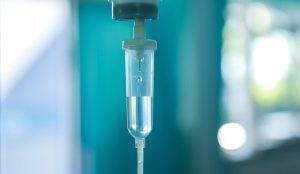
- Breast MRI: This test takes highly detailed, cross-sectional photos of the inside of the breast. To get a breast MRI, you may receive an injection of a contrast solution through an IV in your arm or hand. Then, you’ll lie face down on a padded platform with openings for your breasts, which then slides into a large scanner. It can take up to an hour, or as little as 10 minutes if the newer “fast MRI” is used. The results are usually available in one or two days.
While all of these tests can be used in the process of diagnosing breast cancer, you may not need all of them. Your doctor will recommend testing procedures depending on your age, overall risk, medical history, symptoms, and other factors.
4. Biopsy
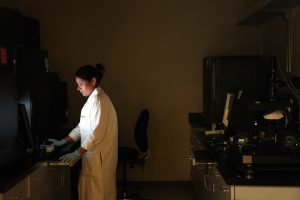
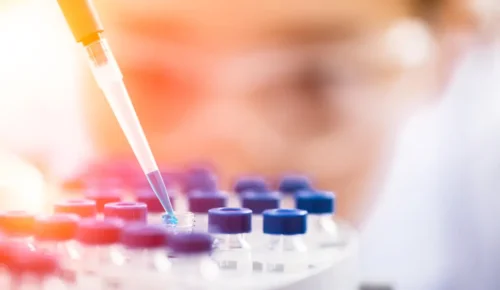
If a physical exam and/or imaging tests uncover something concerning, your doctor may order a biopsy. It’s the only diagnostic test for breast cancer that provides definitive results. During a biopsy, a healthcare professional will take a sample of your breast tissue, then send it to a lab to be checked for cancer cells under a microscope.
There are several types of breast biopsy procedures, including:
- Fine-needle aspiration (FNA): During this procedure, a doctor uses a thin, hollow needle to take a sample of fluid or cells from a lump. Doctors typically perform FNAs when they can feel a lump and need to determine whether it’s a fluid-filled cyst or solid mass.
- Core needle biopsy (CNB): A core needle biopsy uses a larger, hollow needle to remove a larger sample of breast tissue for testing.
- Surgical (open) biopsy: In rare cases, a doctor may recommend surgery to obtain a breast tissue sample. This may happen if the results of a needle biopsy are inconclusive, a patient has a suspicious area that’s too large to sample with a needle, or if the area is not reachable by needle.
- Skin punch biopsy: A doctor might recommend a skin punch biopsy if there are visible changes to the breast skin, such as redness or thickening. The doctor will use a small cutting tool to remove a tiny circular piece of skin and underlying tissue to check for inflammatory breast cancer, Paget’s disease of the breast, or other signs of breast cancer involving the skin.
Most biopsies take between 10 and 20 minutes, although surgical procedures can take four to six hours. The results are usually available in a few business days. Even though biopsies are an important tool for diagnosing breast cancer, they are also just as important for ruling it out. Around 75 percent of the 1.6 million breast biopsies performed in the U.S. each year come back negative.
5. Pathology report and final diagnosis
After analyzing your tissue sample in the lab, a pathologist will create a report containing the diagnosis as well as important information about the type of breast cancer found. This is where you will get details on the stage and grade of the tumor, and whether the cells have certain characteristics such as hormone receptor or HER2 status. Your doctor will review the findings with you and use the report to make recommendations on treatment options.
What comes after a breast cancer diagnosis?
If you receive a breast cancer diagnosis, the sooner you start treatment, the more likely it is that you’ll have a positive outcome. But keep in mind: While treatment may seem urgent, there is generally time to consider your options or seek a second opinion. Your doctor will make personalized treatment recommendations depending on the type and stage of your cancer, hormone receptor and HER2 status, your overall health, and your preferences.
The most common breast cancer treatments include surgery, such as lumpectomy or mastectomy to remove the cancer, and radiation therapy to eliminate any remaining cancer cells in the breast or nearby tissue. Some patients may also consider breast reconstruction after surgery. Other treatment options include chemotherapy (which may be used before or after surgery), hormone therapy if the cancer depends on estrogen or progesterone to grow, or targeted therapies for cancers with specific proteins or genetic mutations. In many cases, doctors use a combination of treatments to put breast cancer into remission. For advanced breast cancer cases, treatments like chemotherapy and hormone or other targeted therapies can be used to slow tumor growth. Your doctor may also recommend a clinical trial of a new treatment or intervention before it is widely available.
Advancements in diagnostic research
BCRF supports numerous investigators working to improve how breast cancer is detected and diagnosed.
We’re supporting the development of new imaging technologies—from contrast-enhanced mammography to AI-driven risk assessment. These tools can make it easier to detect breast cancer earlier and with greater accuracy. BCRF-supported investigators are also studying blood-based tests and biomarkers that may help identify breast cancer through a simple blood draw.. And they are developing AI tools to improve pathology and testing to ensure that tumors are precisely typed and matched to treatments. More recently, a first-in-class AI imaging tool has been approved for risk assessment.
Innovations like these could one day allow doctors to find and diagnose breast cancer more easily and quickly. They may also offer more accurate insights into what type of cancer and which treatments may be most effective—improving outcomes for more women diagnosed with the disease.
Stay informed and empowered. With BCRF, you can explore the latest insights, breakthroughs, and expert guidance on breast cancer diagnosis. Join us in advancing research.
Frequently asked questions about breast cancer diagnosis
1. How is breast cancer typically diagnosed?
Breast cancer is usually diagnosed through a combination of a physical breast exam, imaging tests such as mammograms and ultrasounds, and a biopsy to confirm the presence of cancer cells.
2. What are the diagnostic tests for breast cancer?
Common diagnostic tests include mammograms, ultrasounds, MRIs, and biopsies, which remove a tissue sample to check it for cancer.
3. How long does it typically take from breast cancer diagnosis to surgery?
In the U.S., most breast cancer patients who receive surgery have it within 90 days of their diagnosis. The exact timing of surgery can vary from patient to patient, depending on their cancer type, stage, health, and insurance coverage, as well as treatment recommendations, which might include a course of chemotherapy prior to surgery. While surgery is part of treatment recommendations for most cases of breast cancer, some individuals may not need it.
4. How soon after breast cancer diagnosis does treatment start?
Treatment usually begins within a few weeks after diagnosis, but timing depends on the type of cancer, treatment plan, insurance coverage, and any pre-treatment tests, insurance authorizations, or consultations. The earlier you start treatment, the more likely you’ll have a positive outcome.
5. What is the average age of breast cancer diagnosis?
The median age for breast cancer diagnosis is around 62 years old, though it can occur at any age. The risk increases as women get older. However, in recent years there has been a rise in cases in women under 50.
Selected References 
Bleicher, R. J. (2018). Timing and delays in breast cancer evaluation and treatment. Annals of Surgical Oncology, 25(10), 2829–2838. https://doi.org/10.1245/s10434-018-6615-2
Breast Cancer Research Foundation. (n.d.). All about blood tests for breast cancer. https://www.bcrf.org/about-breast-cancer/blood-tests-for-breast-cancer/
Breast Cancer Research Foundation. (n.d.). All about breast cancer hormone receptor status. https://www.bcrf.org/about-breast-cancer/breast-cancer-hormone-receptor-status/
Breast Cancer Research Foundation. (n.d.). All about HER2 status in breast cancer. https://www.bcrf.org/about-breast-cancer/her2-status-breast-cancer/
Breast Cancer Research Foundation. (n.d.). Breast biopsy. https://www.bcrf.org/about-breast-cancer/breast-biopsy/
Breast Cancer Research Foundation. (n.d.). Breast cancer grades and what they mean. https://www.bcrf.org/about-breast-cancer/breast-cancer-grades/
Breast Cancer Research Foundation. (n.d.). Breast cancer stages and what they mean. https://www.bcrf.org/about-breast-cancer/breast-cancer-stages/
Breast Cancer Research Foundation. (n.d.). Breast cancer treatments. https://www.bcrf.org/about-breast-cancer/breast-cancer-treatments/
Breast Cancer Research Foundation. (n.d.). Diagnosis. https://www.bcrf.org/about-breast-cancer/diagnosis/
Breast Cancer Research Foundation. (n.d.). Facts about breast cancer in younger women. https://www.bcrf.org/about-breast-cancer/breast-cancer-young-women/
Breast cancer statistics | World Cancer Research Fund. (2025, July 28). World Cancer Research Fund. https://www.wcrf.org/preventing-cancer/cancer-statistics/breast-cancer-statistics/
Elmore, J. G., Longton, G. M., Carney, P. A., Geller, B. M., Onega, T., Tosteson, A. N. A., Nelson, H. D., Pepe, M. S., Allison, K. H., Schnitt, S. J., O’Malley, F. P., & Weaver, D. L. (2015). Diagnostic concordance among pathologists interpreting breast biopsy specimens. JAMA, 313(11), 1122. https://doi.org/10.1001/jama.2015.1405
Siegel, R. L., Kratzer, T. B., Giaquinto, A. N., Sung, H., & Jemal, A. (2025). Cancer statistics, 2025. CA a Cancer Journal for Clinicians. https://doi.org/10.3322/caac.21871
Survival rates for breast cancer. (n.d.). American Cancer Society. https://www.cancer.org/cancer/types/breast-cancer/understanding-a-breast-cancer-diagnosis/breast-cancer-survival-rates.html