

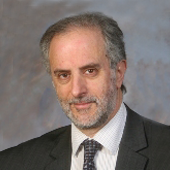
Titles and Affiliations
Chair of the Department of Epidemiology and Population Health
Associate Director for Population Sciences, Montefiore Einstein Cancer Center
Scientific Director of the Epidemiology and Clinical Research Informatics Shared Resource
Research area
Understanding the genetic and molecular signatures associated with a higher risk of developing invasive breast cancer and identifying which patients with invasive disease are more likely to develop metastasis.
Impact
Ductal carcinoma in situ (DCIS) is a premalignant lesion, sometimes referred to as “stage 0” breast cancer. Estimates of DCIS cases that advance to invasive breast cancer range from 20-50 percent. Currently, the standard of care for DCIS is to treat it like early-stage breast cancer, typically with the combination of surgery, radiation, and hormone therapy, depending on the specific case. Researchers have raised concerns about overtreating DCIS and have debated whether the risk of it progressing to invasive breast cancer outweighs the impact of treatment on a patient’s quality of life. Similarly, many patients with invasive breast cancer receive chemotherapy to reduce their risk of metastasis, even though some of these patients may never relapse, unnecessarily exposing them to side effects. Current clinical criteria don’t sufficiently predict if DCIS or invasive breast cancer will progress and thus which patients should have more aggressive therapy. Dr. Rohan is using artificial intelligence (AI) to identify tissue-based markers that can answer both questions with greater precision, allowing for more personalized care and sparing patients from unnecessary treatment.
Progress Thus Far
Dr. Rohan and his team have been applying AI to diagnostic tissue images from patients with DCIS to uncover novel tissue-based markers of invasive breast cancer risk. The team is especially focused on breast tissue composition, immune microenvironment, and cellular senescence, a state where cells stop dividing. They are developing and validating an AI algorithm that can distinguish tissue types and calculating a senescence score for each tissue sample. With this scoring nearly complete, the team will soon begin analyzing whether these scores are linked to a patient’s risk of developing invasive breast cancer.
What’s next
Over the next year, this team will complete their AI-based analysis of breast tissue composition, cellular senescence, and the immune microenvironment in DCIS, and move into full data analysis. The team will extend their AI approach to whether these same tissue-based markers can help identify which patients are at greatest risk of their cancer spreading to other parts of the body. Identifying who truly needs aggressive treatment, and who does not, could reduce unnecessary side effects and improve quality of life for patients with invasive breast cancer.
Biography
Thomas E. Rohan, MBBS, PhD, DHSc is the Chair of the Department of Epidemiology and Population Health at the Albert Einstein College of Medicine in New York, Associate Director for Population Sciences in the Montefiore Einstein Cancer Center (MECC), and Scientific Director of the Epidemiology and Clinical Research Informatics Shared Resource at MECC. He is a past member of the National Cancer Institute Board of Scientific Counselors, and he is on the editorial board of several journals. He is a cancer epidemiologist with extensive experience in the design, conduct, and analysis of studies examining the genetic, molecular, nutritional, and hormonal factors in a wide range of cancers, especially breast cancer. He has published widely on these topics and has co-edited books on cancer precursors and cervical cancer. Dr. Rohan has extensive experience conducting translational studies that involve multiple centers and investigators that require careful planning and coordination.