


Learn about breakthroughs directly from BCRF-funded investigators
On Friday, October 16, the Breast Cancer Research Foundation (BCRF) will recognize the accomplishments of our more than 280 researchers at this year’s Symposium and Awards Luncheon, held in New York City.
Luncheon programming will include the honoring of Karen and Rob Hale with the Sandra Taub Humanitarian Award for their dedication and extraordinary contributions to breast cancer research.
Meanwhile, this year’s symposium, “How Studying Early-Onset Breast Cancer is Helping Women of All Ages,” will feature a panel with BCRF researchers Drs. Neil Iyengar, Ann Partridge, and Kornelia Polyak. Dr. Polyak is also the recipient of this year’s Jill Rose Award for Scientific Excellence. BCRF’s Founding Scientific Director Dr. Larry Norton and BCRF Scientific Director Dr. Judy Garber will moderate the panel.
Here’s what you need to know about our outstanding panelists and their accomplishments.

Neil Iyengar, MD
Emory University
Atlanta, GA
Neil Iyengar, MD, is the director of the Cancer Survivorship program and the co-director of the Breast Medical Oncology program at Winship Cancer Institute at Emory University. Before joining Emory University, he was an Associate Member and Attending Physician in the Breast Medicine Service at MSKCC. His research focuses on the implications of metabolic health and the development of lifestyle interventions (e.g., structured exercise, diet) as an anti-cancer strategy. His work has been supported by National Cancer Institute and American Cancer Society grants as well as awards from several organizations including Career Development and Merit Awards from the ASCO Conquer Cancer Foundation and a Young Investigator Award from Expedition Inspiration Fund, and awards from the National Comprehensive Cancer Network and the American Association for Cancer Research.
About their BCRF research: While at Memorial Sloan Kettering Cancer Center, Dr. Iyengar developed the Healthy Living Program, a digital-hybrid multidisciplinary intervention care model that offers individualized lifestyle prescriptions beginning at breast cancer diagnosis. The intervention includes online risk assessment tools, virtual education sessions, and telemedicine appointments with exercise physiologists, nutritionists, and nurse practitioners trained in lifestyle coaching who help patients transition from cancer diagnosis to post-treatment survivorship. Program participants reported improvements in their overall sense of wellbeing, physical and emotional functioning, and levels of energy and fatigue during the first six months after breast cancer diagnosis. Moving forward, the team will evaluate how these digital tools influence quality of life and measure how they affect exercise habits and eating behaviors.

Ann Partridge, MD, MPH
Harvard Medical School
Boston, MA
Ann Partridge, MD, MPH, is a professor of medicine at Harvard Medical School. She is a clinical researcher focused on improving the care and outcomes of patients with cancer, with a focus on treatment, survivorship, and psychosocial issues facing women with breast cancer. She is the vice chair of Medical Oncology at Dana-Farber Cancer Institute (DFCI), director of the Adult Survivorship Program at DFCI and Brigham and Women’s Hospital, and the founder and director of the Program for Young Women with Breast Cancer at DFCI. She serves as co-chair of the Alliance for Clinical Trials in Oncology Breast Committee, member of the National Cancer Institute Breast Cancer Steering Committee and the American Society of Clinical Oncology Board of Directors and has recently begun serving as chief scientific advisor for Susan G. Komen. Dr. Partridge has published numerous manuscripts, lectures both nationally and internationally on issues of cancer survivorship and young women with breast cancer and has received several grants and awards recognizing her work.
About their BCRF research: Dr. Partridge and her team are dedicated to addressing what drives breast cancer in younger individuals, focusing on the unique challenges that accompany developing breast cancer at a younger age. Their research looks at how both medical and supportive care impact survival and quality of life for younger patients. They are also exploring what makes breast cancer in younger women biologically different and are focused on improving care for these women through the Young Women’s Breast Cancer Study (YWS) and the Young, Empowered and Strong (YES) Study. YWS2i, a major project running through the YES platform, found that younger women living with metastatic breast cancer frequently report psychosocial, health, and cancer management concerns. The team plans to continue enrolling and following participants in these studies and will use data to support research on pregnancy and breastfeeding after cancer. They will also study how the immune system behaves in breast cancers diagnosed at a younger age and seek to better understand why and how recurrences happen.
Kornelia Polyak, MD, PhD
Dana-Farber Cancer Institute
Boston, MA
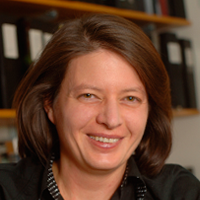
Kornelia Polyak, MD, PhD, is a professor of medicine at Dana-Farber Cancer Institute, Harvard Medical School, and is an internationally recognized leader in the breast cancer research field. Dr. Polyak’s laboratory is dedicated to the molecular analysis of human breast cancer with the goal of improving the clinical management of breast cancer patients. Her lab has made significant efforts to develop new ways to study tumors as a whole and to apply interdisciplinary approaches. Using these methods, Dr. Polyak’s lab has been at the forefront of studies analyzing purified cell populations from normal and neoplastic human breast tissue at genomic scale and in situ at single cell level and to apply mathematical and ecological models for the better understanding of breast tumor evolution. She has also been successful with the clinical translation of her findings including the testing of efficacy of JAK2 and BET bromodomain inhibitors for the treatment of triple-negative breast cancer in clinical trials. Dr. Polyak has received numerous awards including the Paul Marks Prize for Cancer Research in 2011, the 2012 AACR Outstanding Investigator Award for Breast Cancer Research, and the Rosalind Franklin Award in 2016. She is also a 2015 recipient of the NCI Outstanding Investigator award.
About their BCRF research: Dr. Polyak is focused on understanding the potential contributors to the recent increase in breast cancer diagnoses in women under 50, specifically how immune cells are involved. Her research has shown that during different pregnancy stages, a well-coordinated reshaping of immune cells around the breast occurs, and she and her team are seeking to better understand how this happens. Their work may inform strategies to prevent pro-cancer changes in immune cells as well as help create more effective immunotherapies. Previously, her team found that T-cells seem to play key roles in establishing an immunosuppressive environment in invasive tumors. Further analysis revealed that regulatory T (Treg) cells were significantly more abundant in invasive breast cancer and blocking them not only remodeled the tumor immune environment, but also inhibited tumor growth. The team also found a link between mammary glands at various stages of pregnancy and increased expansion and activation of Tregs and CD8+ T cells. Next, Dr. Polyak and her colleagues will continue to assess how the immune repertoire is associated with breast cancer initiation and progression, including the role of pregnancy-associated changes in immunosuppressive T cells and other immune cells. These studies will reveal how pregnancy changes breast tumor development by reshaping the immune systems.
Moderators

Judy E. Garber, MD, MPH
Dana-Farber Cancer Institute
Harvard Medical School
BCRF Scientific Director
2024 Jill Rose Award for Scientific Excellence
Dr. Garber is the chief of the Division of Cancer Genetics and Prevention at Dana-Farber Cancer Institute, an attending physician at the Brigham and Women’s Hospital, and professor of medicine at Harvard Medical School. In addition to serving as BCRF’s Scientific Director and a BCRF investigator, Dr. Garber is a foremost expert in clinical cancer genetics and has played a major role in developing national guidelines. Her interests focus on breast cancer genetics, risk reduction, and developing treatments for individuals carrying breast cancer–associated mutations. Her research includes the study of basal-like breast cancer, which is common in women with BRCA1 mutations. Her first neo-adjuvant trial of cisplatin in patients based on the role of BRCA1 in DNA repair demonstrated a significant complete response rate that has led to a series of trials, including a randomized phase 2 international, multicenter trial.
About their BCRF research: Little is known about the biology of BRCA1 or BRCA2-driven breast cancers that are estrogen receptor (ER)–positive, which may be associated with less-favorable biology and a higher risk of recurrence. Dr. Garber is working to understand the biology of BRCA-associated, ER-positive breast cancers more deeply to ultimately improve treatment for these patients. Her team has assembled tumor samples from a cohort of patients with BRCA1-associated, ER-positive breast cancer and another with BRCA2-associated, ER-positive breast cancer. This year, they initiated detailed molecular profiling and analysis of these samples. They will also include an exploratory cohort of ER-positive tumors that are also deficient in PALB2, another breast cancer susceptibility gene.

Larry Norton, MD
Memorial Sloan Kettering Cancer Center
BCRF Founding Scientific Director
Dr. Norton has dedicated his life to the eradication of cancer, and in 1993, he founded BCRF with the late Evelyn H. Lauder. At Memorial Sloan Kettering Cancer Center, Dr. Norton serves as the senior vice president in the Office of the President, the medical director of the Evelyn H. Lauder Breast Center, and the Norna S. Sarofim Chair in Clinical Oncology. In addition to serving as BCRF’s Founding Scientific Director, Dr. Norton—whose research scope is vast—collaborates with BCRF researchers on several projects. He has been involved in developing several effective therapies, including paclitaxel and trastuzumab, and he co-invented the Norton-Simon Model of cancer growth, which has broadly influenced cancer therapy, and the self-seeding concept of cancer metastasis and growth. Over his illustrious career, Dr. Norton has received many honors, including being elected to the American Academy of Arts & Sciences.
About their BCRF research: Dr. Norton is involved in collaborations with BCRF investigators on projects aimed at improving breast cancer treatments and advancing our understanding of MBC. Most notable of these collaborations is the Mathematical Oncology Initiative, underwritten through generous support from the Simons Foundation. The Mathematical Oncology Initiative brings together mathematicians, biologists, oncologists, and other scientists to develop new tools to interpret, model, and understand scientific data.
Click here to purchase tickets to the Luncheon or to make a donation.