Ten years after her experience, the public relations executive is paying it forward
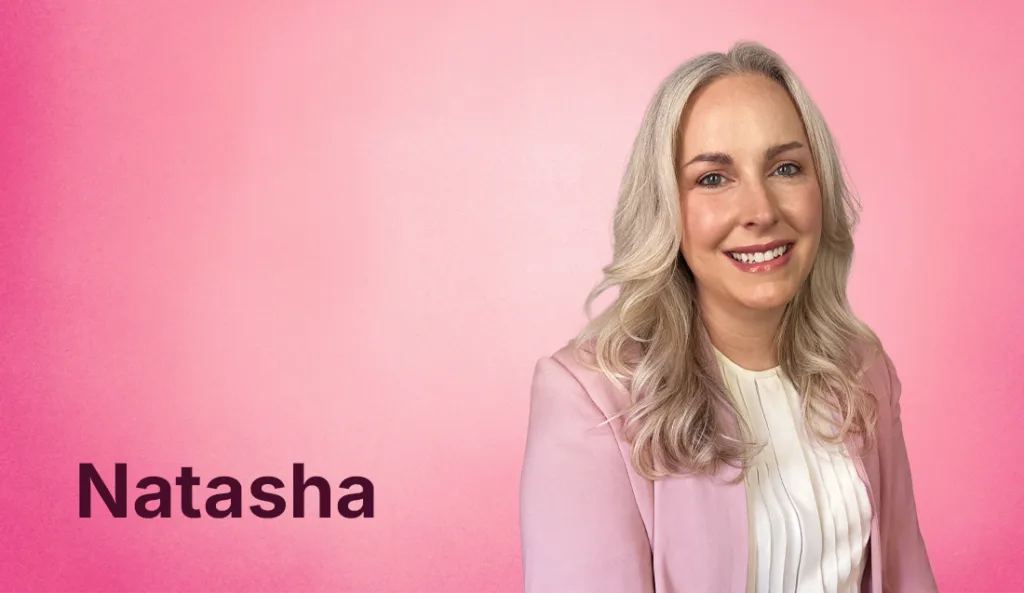
At 31 years old, Natasha Whitling felt out of place when she arrived for the first appointment with her breast cancer surgeon in 2015.
“I have this distinct memory of seeing the typical imagery you see around breast cancer—this woman in a headscarf and some sort of supportive message—and being like, I really don’t want to be involved in any of this,” says the now 44-year-old public relations professional from New York City. “I did not sign up for this sorority, and I don’t want to be a part of it.”
That initial experience left a profound mark. A few years later, after finishing active treatment, Natasha decided she wanted to give back to the breast cancer community. She has since become a powerful voice for breast cancer awareness, education, and advocacy in younger women.
“The thing that I would like people to know is you’re not too young to have breast cancer,” she says. “It’s really important to understand the risk factors, the physical signs, and the daily health and wellness interventions you could put in place now to help lessen your chances of receiving a diagnosis.”
Knowing the physical signs of breast cancer quite possibly saved Natasha’s life. At the time of her diagnosis, Natasha was living a very health-conscious life: She was a healthy eater who had just run her first half marathon. But when she felt a lump the size of a grape tomato in her right armpit one day in the shower, she knew she had to get it checked out. Thankfully, she had an appointment with her gynecologist coming up. Her doctor agreed the lump felt concerning, and sent her for imaging. After an ultrasound and subsequent biopsy, Natasha learned she had stage 3 estrogen receptor-positive, HER2-negative breast cancer.
“It was an incredibly scary, confusing time,” she says. “It’s such a deluge of information and it’s all happening so fast. I also think the medical professionals felt a lot of urgency given my age and that there was already lymph node involvement. You’re asked to make a lot of very serious decisions in a quick amount of time, while you’re still in shock.”
The first decision Natasha made was to have a double mastectomy. Even though the cancer was most likely contained to her right breast, she did not want to endure a lifetime of additional testing and surveillance of her left. She then had an intensive course of chemotherapy that left her sick throughout treatment; thankfully, she was able to take advantage of support services her hospital offered, like a social worker, nutritionist, and acupuncture. She also began hormone therapy, since the cancer was estrogen receptor-positive, when estrogen binds to proteins called estrogen receptors, which then causes a change in the receptor that signals to the cell to keep growing.
About five months after starting chemo, she felt well enough to attend a friend’s bachelorette party on the West Coast, which she had been looking forward to for some time. When she came back that fall, she started radiation therapy.
Through it all, Natasha kept working and managed her illness with support from her boyfriend and a close network of friends.
“I felt like I’d finally hit my stride in New York,” she says. “I had this job I really liked. I had just met someone I really liked. I was close to maybe not having to have a roommate. I just stuck it out.”
When active treatment ended, Natasha took time to process it all. She decided to run the New York City Marathon in 2018, raising money for the Breast Cancer Research Foundation (BCRF), an organization she had known and respected from her work in the nonprofit world. One day, she was reading BCRF’s newsletter when she came across a feature on The Pink Agenda, a nonprofit made of young professionals raising awareness about breast cancer research, with BCRF as the sole grantee.
“I was like, this is the group for me,” she says. “It seems right.”
Natasha quickly connected with the organization, and before long was invited to apply for the board. She is currently Secretary of the Board, and also speaks publicly about her experience to empower other young people to advocate for their health.
Natasha says she is proud to share her industry and personal experience with an organization dedicated to a cause so meaningful to her, and to see her advocacy make a broad impact.
“I don’t think it’s inaccurate to say research saved my life,” she says. “Every treatment that I received was [made possible by] research. And every researcher we fund I hope will be one less young woman we potentially lose to this disease.”
Now, 10 years since her diagnosis, Natasha is in a great place. She married her boyfriend and they live in Brooklyn with their three cats. In many ways, she says, it’s a better life than she had imagined for herself.
“I’m happy and healthy,” she says.