


Titles and Affiliations
Associate Professor, Internal Medicine
Associate Professor of Biomedical Informatics
Associated Scientist
Broad Institute of Harvard and MIT
Research Area
Advancing digital pathology technology to bring state of the art diagnosis to all patients.
Impact
The breast cancer tumor-immune microenvironment (TIME) is a complex ecosystem of diverse cell types, including tumor cells and infiltrating immune cells such as tumor-infiltrating lymphocytes (TILs) and tumor-associated macrophages (TAMs). Pathologists typically diagnose cancer and assess the TIME by reviewing tumor sections through microscopes. But, we are in the midst of a revolution within pathology as, more and more, sections of tumors on slides can be digitized and turned into data—this opens the door for leveraging advanced computational approaches in diagnostics. TILs are known to be significantly associated with response to chemotherapy and overall survival in triple-negative and HER2-positive breast cancer. But, they occcur at low levels and, with current practices, cannot be utilized in diagnostics. Dr. Stover is seizing the opportunity provided by digital pathology to develop a novel image-based methodology to improve the detection of TIME factors. He hopes that the new technology can be used to traverse borders and provide better diagnostic tools to more people.
What’s Next
Dr. Stover and his colleagues have developed a computational approach that can assess TILs on any desktop computer in about five minutes, thereby providing an accessible, low-cost option to characterize the TIME. While macrophages are one of the most abundant classes of immune cells in the breast cancer TIME, there are few methods to quantitate macrophages via digitized tumor slices. In the coming year, his team will remedy this, building on their success with TILs and establishing a novel algorithm to detect and assess the function of TAMs. The team will start with pathology slides, digitize them, and apply the algorithm to identify and classify TAMs from the digitized images. They will then test the algorithm on digital pathology slides obtained from two completed phase 3 clinical trials where clinical outcomes are known. Their technique may provide a novel image-based methodology to quantify TAMs from digital pathology slides and provide a potential method for evaluating the association between TILs, TAMs, and clinical outcomes. Ultimately, Dr. Stover hopes his results will enable the widespread availability of breast cancer digital pathology image-based diagnostics.
Biography
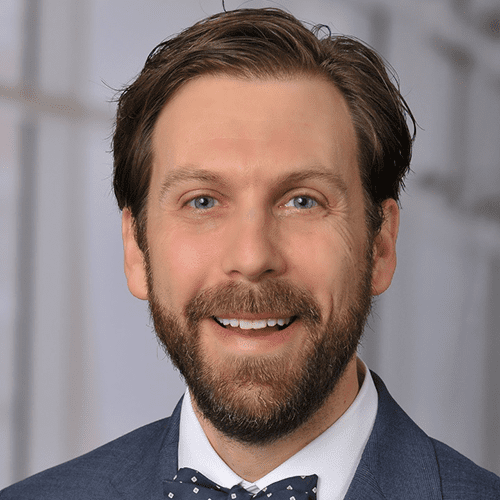
Daniel Stover, MD is an Associate Professor of Internal Medicine in the Division of Medical Oncology and Department of Biomedical Informatics at Ohio State University Comprehensive Cancer Center. He received his MD from Vanderbilt University where he was named to AOA Honor Medical Society. Dr. Stover completed an internal medicine residency at Vanderbilt University Medical Center and was selected as Hugh J. Morgan Chief Resident in Medicine in his final year. A Medical Oncology fellowship followed at Dana-Farber Cancer Institute/ Massachusetts General Hospital/Harvard Cancer Center program, working closely with Dr. Eric Winer during his clinical training. Dr. Stover was a postdoctoral researcher in the lab of Dr. Joan Brugge at Harvard Medical School and the Broad Institute of Harvard & MIT. There he gained the coding/algorithm development skills necessary to lead advanced computational analyses. Dr. Stover then launched an independent laboratory at Ohio State University in 2017, focusing on breast cancer computational biology.
Dr. Stover’s research focus is clinical computational oncology – the application of computational approaches to leverage the immense available and potential data from tumor profiling to improve outcomes for patients with cancer. By working at the intersection of computational biology and clinical oncology, he seeks to advance novel technologies as a critical part of the future of how we will treat and cure cancer, including circulating tumor DNA and digital pathology. In parallel, he cares for patients with breast cancer at the Stefanie Spielman Comprehensive Breast Center and has been named a Castle Connolly Top Doctor for excellence in patient care.
At OSUCCC, Dr. Stover supports collaborative research across the institution, serving as Director of Translational Breast Cancer Research and Principal Investigator of Total Cancer Care, a protocol that has enrolled >72,000 patients at the James Cancer Hospital to facilitate cancer research. Nationally, he is past Chair of the Membership Committee of ASCO, serves as Vice Chair (Correlative Science) of the Breast Committee of Alliance for Clinical Trials in Oncology, and is Co-Chair of the Alliance Standardized Translational ‘Omics Resource. Dr. Stover was named a Fellow of the American Society of Clinical Oncology (FASCO) in 2023.