

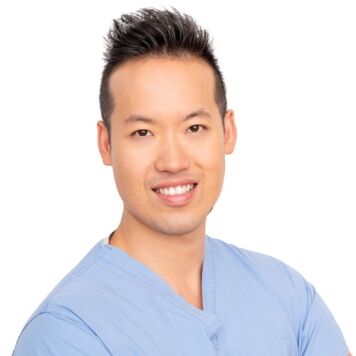
Titles and Affiliations
Surgical Oncologist
Medical Director of the Henrietta Banting Breast Centre
Assistant Professor, Department of Surgery at University of Toronto
Conquer Cancer, the ASCO Foundation
Research area
Understanding the impact of social marginalization and variability in care on outcomes in patients with invasive lobular carcinoma
Impact
Invasive lobular carcinoma (ILC) originates in the lobules, glands in the breast that produce milk. The incidence of ILC is on the rise, but it is treated the same way as invasive ductal carcinoma, despite differences in cancer biology, detection, and response to treatment. Research on this subtype is limited because each treatment center only sees a small number of patients with ILC. For his Conquer Cancer Award supported by BCRF, Dr. Lim is conducting a series of studies that look at factors beyond biology, such as social and geographic disparities in care. He and his team will make use of a large administrative health care databases that captures information on patients diagnosed with ILC in Ontario, Canada.
Progress Thus Far
Dr. Lim and his team analyzed data from more than 180,000 breast cancer cases diagnosed between 2005 and 2025, including over 23,000 cases of pure or mixed ILC, to examine whether social marginalization, such as living alone, limited financial resources, lower workforce participation, and housing-related factors, was associated with cancer stage at diagnosis and survival. They found that patients living in areas with greater social and economic disadvantage were less likely to have had a recent mammogram and were more likely to be diagnosed with more advanced-stage disease. These same factors were also linked to a higher risk of death after a breast cancer diagnosis, even after accounting for differences in tumor characteristics and treatment received. The team also found that patients with pure ILC had a modestly higher risk of death compared with patients with IDC.
What’s next
These findings highlight that factors beyond the biology of the tumor, including access to screening, social support, economic resources, and other community-level factors, can influence when breast cancer is detected and how patients fare over time. Dr. Lim’s ongoing work will continue to explore how variability in care across different treatment centers and providers, along with characteristics of the treating center and provider, further shapes outcomes for patients with ILC. While precision medicine often focuses on tailoring care based on tumor biology, this work expands that definition, highlighting how where a patient lives, where they are treated, and who provides their care can also affect survival.
Biography
David Lim, MD is a breast surgical oncologist at Women’s College Hospital, Medical Director of the Henrietta Banting Breast Centre and surgeon-scientist based at Women’s College Research Institute. He is an Assistant Professor in the Department of Surgery, Division of General Surgery at the University of Toronto. He has an appointment at the University of Toronto Institute of Medical Science as an Associate Member and the Institute of Health Policy, Management and Evaluation as an Assistant Professor. He is also Research Director of the University of Toronto Breast Surgical Oncology Fellowship Program.

