

Titles and Affiliations
Senior Vice Chair and Division Director, Nuclear Medicine
Drs. Barry A. and Marilyn J. Siegel Professor of Radiology
Mallinckrodt Institute of Radiology at Washington University School of Medicine
Research area
Testing a new imaging method to predict response to therapy in estrogen receptor positive/HER2-negative breast cancer.
Impact
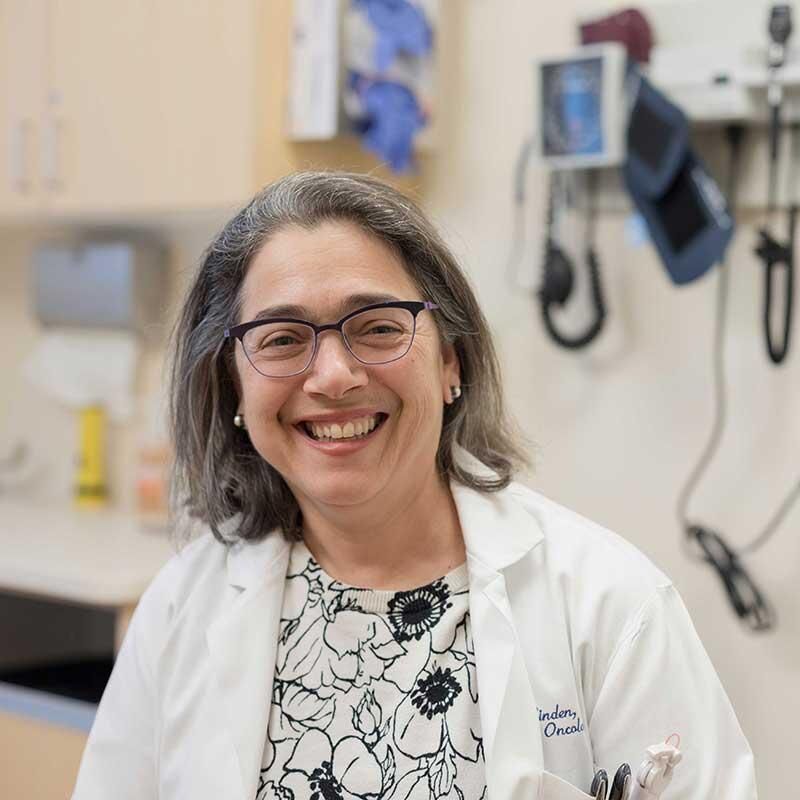
Many individuals with hormone receptor (HR)-positive breast cancer can be treated successfully with endocrine therapy (ET), but the cancer can return. Some patients with recurrent disease will benefit from additional ET approaches, including addition of cell cycle inhibitors (CDK4/6i), but not all receive benefit and for those who don’t chemotherapy is currently the only option. Drs. Linden and Dehdashti are developing a method to use PET imaging to determine—within days—whether an individual with recurrent HR-positive disease is likely to benefit from additional ET and CDK4/6i. This test could help to direct individuals quickly to the best treatment, sparing those likely to benefit from ET alone from the side effects of chemotherapy, and avoiding the cost and delay from ineffective ET for those who will not benefit.
Progress Thus Far
The trial opened in the summer of 2024 and is currently accruing patients at 2 sites with a third site expected to activate this year. The goal is to enroll 60 patients in this multi-center trial.
What’s next
The phase two trial will enroll patients with HR-positive/HER2-negative metastatic breast cancer Before, during, and after treatment with ET and CDK4/6i (abemaciclib/Verzenio®) patients will receive a PET scan, using a special imaging tracer, which is designed to reveal if the estrogen receptor is still active in their tumors. Drs. Linden, Dehdashti, and their teams will then assess if estrogen receptor activation correlated with patients’ response to this therapy.
Biography
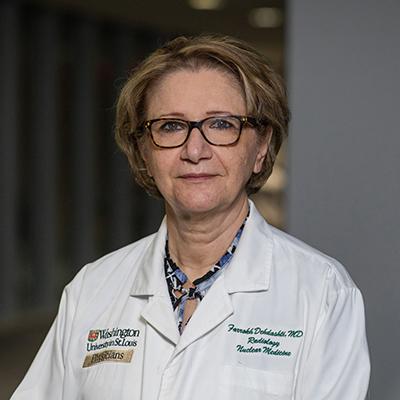
Farrokh Dehdashti, MD is the Drs. Barry A. and Marilyn J. Siegel Professor of Radiology and senior vice chair and division director of nuclear medicine for Mallinckrodt Institute of Radiology at Washington University School of Medicine. And also serves as the PET medical director of the Center for Clinical Imaging Research and is the co-leader of Siteman Cancer Center’s Oncologic Imaging Program, which focuses on translational research studies in all fields of imaging.
An innovative translational researcher who has been involved in PET research for over 30 years, Dr. Dehdashti focuses on applying PET imaging to the diagnosis and treatment of cancer. She is credited with conducting the first patient studies of several novel PET diagnostic compounds related to cervical, breast, and prostate cancers and has advanced the use of PET for detecting tumor hypoxia and tracking chemotherapy and radiation sensitivity and resistance.
Her early research on steroid hormones in breast cancer was the first to show that PET using F-18 fluroestradiol (FES), an estrogen analogue, can reliably and noninvasively assess tumor estrogen receptor status and can be used to predict response to endocrine therapy. That work was groundbreaking in its potential to save patients from having to undergo numerous invasive biopsies and being treated with ineffective endocrine therapy.
Dr. Dehdashti earned her medical degree from Pahlavi University School of Medicine in Iran in 1977 and competed her radiology residency in 1980 at the same institution. She served as chief resident and then research fellow in PET imaging in the division of nuclear medicine at Washington University School of Medicine before joining the faculty in 1990. In 2017, Dr. Dehdashti received the Daniel P. Schuster Award for Distinguished Work in Clinical and Translational Science at Washington University.