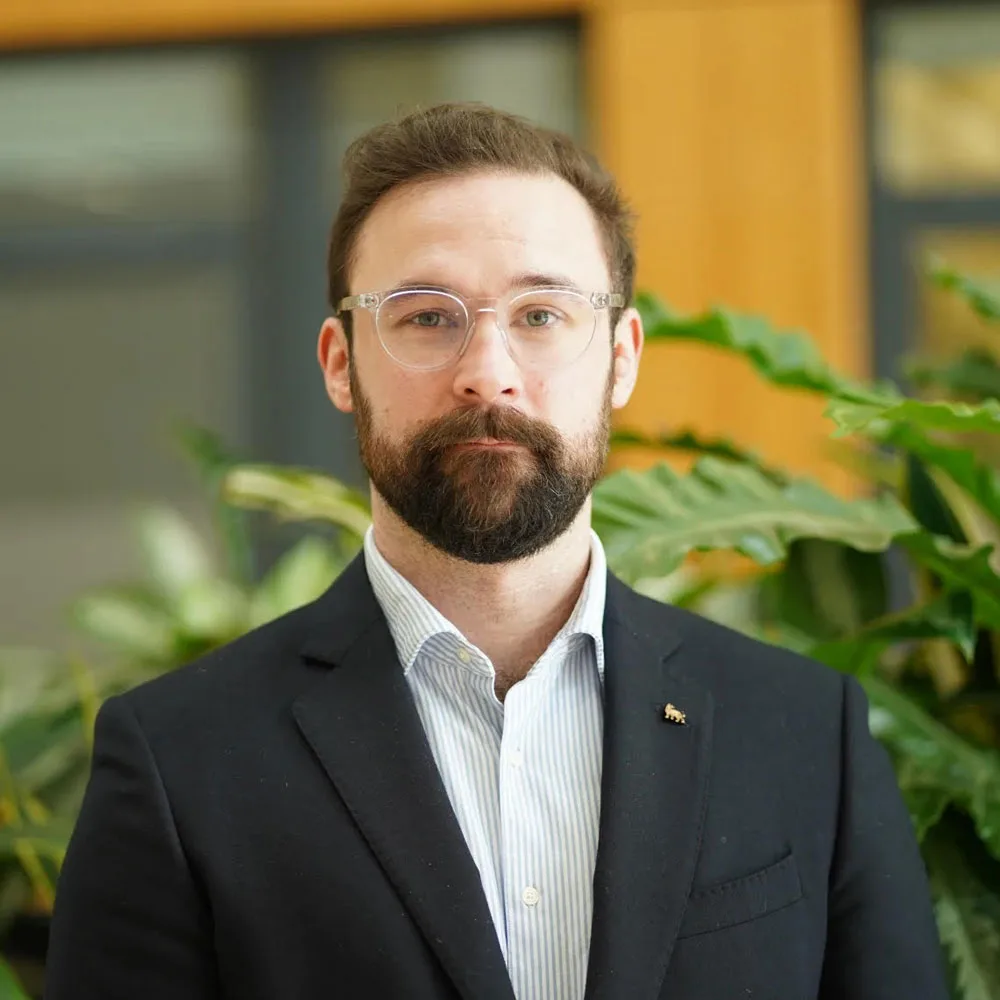
Titles and Affiliations
Associate Professor
Senior Molecular Epidemiologist
Cancer Epidemiology Unit
Cancer Research UK – Cancer Grand Challenges
Research Area
Investigating whether naturally occurring autoantibodies help protect certain high-risk individuals from developing cancer, with a focus on hereditary breast cancer.
Impact
Drs. Smith-Byrne and Bastard are part of ATLAS, an international team effort across six countries exploring whether immune-modulating autoantibodies help explain why some high-risk individuals never develop cancer. The project builds on Dr. Bastard’s and team member Jean-Laurent Casanova’s earlier discovery that certain autoantibodies in patients with life-threatening COVID-19 blocked the immune system’s ability to fight the virus, antibodies that were remarkably rare in people who had mild or no symptoms. Applying this same logic to cancer, the team hypothesizes that a tumor’s fate, whether it is tolerated or destroyed by the immune system, may be reflected in a person’s antibodies, and that studying these antibodies could reveal why certain people at high genetic risk of cancer never actually develop it. Because hereditary breast cancer risk is so well characterized, breast cancer is a natural focus for this work, particularly BRCA1 and BRCA2 mutation carriers who remain cancer-free despite carrying a mutation known to substantially raise their lifetime risk.
What’s Next
The team will draw on approximately 1,000 samples from BRCA mutation carriers who have not developed disease, alongside roughly 1,000 additional breast cancer patients from other cohort studies, including those with hereditary risk, and will compare these against broader cancer cohorts and healthy controls to sharpen what is specific to breast cancer. Using advanced, proteome-scale antibody profiling technology, the team will search for antibodies that either protect against or promote breast tumor development in these high-risk women, characterizing their specificity and testing their functional impact on immune responses relevant to breast cancer. This work has the potential to change how the field understands immune surveillance specifically in hereditary breast cancer, uncovering new breast tumor antigens and antibody-mediated immune vulnerabilities, with the goal of identifying new biomarkers and druggable targets that could help prevent breast cancer in high-risk women or improve treatment for those who develop it.
Biography
Karl Smith-Byrne, PhD is an Associate Professor Senior Molecular Epidemiologist
in the Cancer Epidemiology Unit of University of Oxford. Dr. Smith-Byrne was diagnosed with rectal cancer at 27, just months after completing his doctorate in cancer epidemiology. As a survivor and patient advocate, he brings the perspective of someone who has lived both sides of the research equation. He is committed to ensuring that research remains accountable to the people it aims to serve—championing patient and public involvement at every stage, from study design through to how findings are communicated. Dr. Smith-Byrne works to make science accessible, transparent about uncertainty, and delivered to the communities who need it most.
As a researcher, Dr. Smith-Byrne’s work sits at the intersection of population health, molecular epidemiology, and cancer causes. He studies cancer risk and early disease processes, with a focus on developing new methods for therapeutic prevention. His research draws on large, well-characterized cohorts with detailed clinical follow-up, connecting biological mechanisms to real-world outcomes. In the ATLAS team, Dr. Smith-Byrne helps embed advocacy throughout the program and works as part of the epidemiology team to ensure the Atlas remains open, scientifically rigorous, and centered on public and patient priorities. He is committed to interdisciplinary collaboration and research that translates into tangible benefit for patients and populations.