


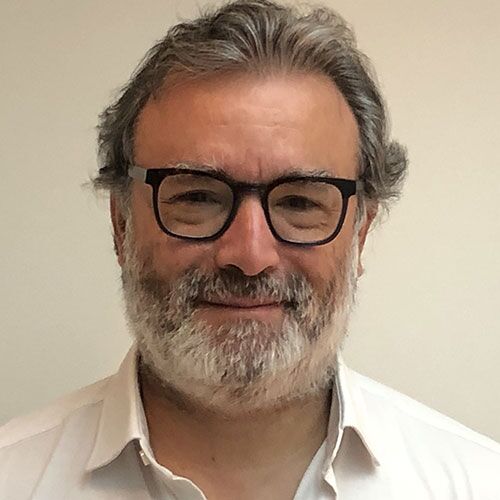
Titles and Affiliations
Honorary Research Associate
The Sir Peter MacCallum Department of Medical Oncology
Research Area
Using AI to assess and uncover biomarkers in pathology images to improve breast cancer diagnosis
Impact
Breast cancer diagnosis has long relied on expert pattern recognition by doctors and pathologists. Physicians assess a patient’s story—such as age, family history, and symptoms—alongside physical examinations and imaging to determine whether cancer is likely. The final and most definitive step comes from a pathologist, who examines a tissue sample under the microscope and identifies the characteristic appearance of cancer cells. This method has been the foundation of diagnosis for over a century and remains essential not only for confirming cancer but also for determining how aggressive it is, which guides treatment decisions and prognosis. However, this approach has its limitations, as it cannot always predict how a cancer will behave or respond to treatment.
What’s Next
Dr. Salgado’s research seeks to build on that foundation by using artificial intelligence (AI) to extract far more information from traditional pathology images than human eyes can detect. By analyzing digital images of breast cancer tissues from major clinical trials, Dr. Salgado and his team will assess whether AI can reveal new patterns within both cancer cells and the immune cells surrounding them. These patterns may provide valuable clues about how individual patients are likely to respond to treatment, enabling more precise and personalized care. Ultimately, this work represents an important step toward integrating cutting-edge technology with expert clinical practice, advancing the field of cancer diagnostics and improving outcomes for patients.
Biography
Roberto Salgado, MD, PhD is board certified in Anatomical Pathology since 2006 and works as an Anatomic Pathologist in ZAS Hospitals, Antwerp, Belgium. He’s Honorary Research Associate at the Division of Research at the Peter Mac Callum Cancer Center, Melbourne, Australia, as well as being part of the Tracer-X Consortium at the Francis Crick Institute, UK aiming at deciphering the clonal evolutional immune-pressures in lung. Currently, he’s co-chairing with Sherene Loi, Peter Mac Callum Cancer Center, Melbourne, Australia, and Carsten Denkert, University of Marburg, Germany, an International Consortium of Pathologists, namely the International Immuno-Oncology Biomarkers Working Group that develops guidelines for the assessment of Immuno-Oncological Biomarkers in mostly breast cancer. This Working Group is a pathologist-driven group, with more than 900 pathologists on board, from 59 countries. This Working Group aims to develop guidelines and tools to help pathologists implement TILs in daily and clinical trial practices, including AI-TIL work in clinical trials, publishing over 15 manuscripts over the past 10 years. His strategic views on oncology have been published in major international high impact factor journals such as Nature Reviews Clinical Oncology, Nature Reviews Drug Discovery, and Lancet Oncology. Research work has been published in Nature, The Lancet Oncology, The Lancet, Journal of Clinical Oncology, Nature Medicine. Finally, he’s a member of the WHO Editorial Board of the WHO Classification of Breast Tumours.