


Breast MRI: What It Is, How It Works, and What to Expect
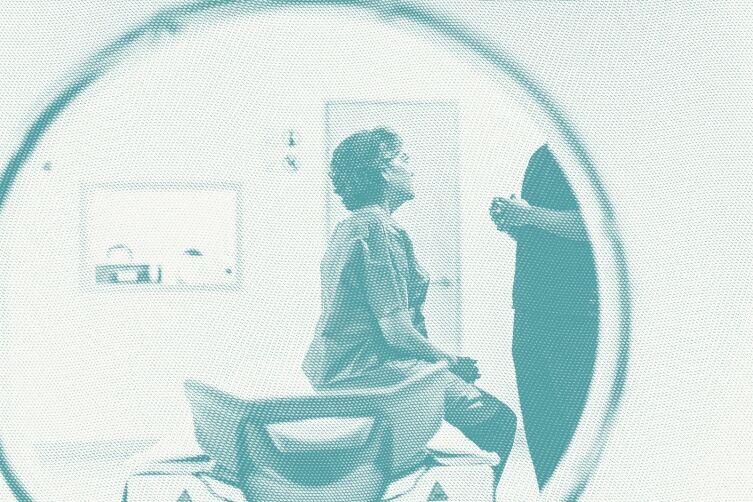
What is a breast MRI? How does it differ from a mammogram? What can you expect during the procedure, and how long does it take? BCRF answers common questions about this supplemental screening tool.
For most women, mammograms are the most effective screening tool for catching breast cancer early, when it’s small and easier to treat. But if your mammogram shows a suspicious area that requires further investigation, your doctor may order a breast MRI (magnetic resonance imaging). An MRI provides radiologists with highly detailed images of the inside of the breast, enabling them to more accurately detect some cancers not seen on a mammogram or other screening tests.
Breast MRI also accompanies mammograms in several other situations, such as if you have breast symptoms during pregnancy or have a known predisposition or elevated genetic risk of breast cancer. Keep reading for more information on how breast MRI works, what you can expect during the test, potential risks, and more.
What is a breast MRI?
A breast MRI is a supplemental screening and assessment tool that captures very detailed, cross-sectional pictures of the inside of the breasts. It has the highest sensitivity for breast cancer detection among current clinical imaging tools.
During the test, an MRI machine (scanner) produces a series of images using radio waves and powerful magnets. The scanner is connected to a computer that assembles the pictures into a 3D image. The person performing your scan may inject a contrast dye (typically gadolinium) into a vein in your arm prior to the scan to enhance the appearance of abnormal tissue (breast MRI with contrast).
Some hospitals and clinics now offer a newer type of breast MRI called abbreviated breast MRI (AB-MRI) or fast MRI. An AB-MRI is almost identical to a traditional breast MRI but takes only 10 minutes to perform, whereas a traditional MRI can take up to an hour. It is also less expensive than a traditional MRI when not covered by insurance. This emerging technology is an active area of research, and recent comparative studies have shown that the traditional, full-protocol MRI remains more sensitive than AB-MRI. Like traditional MRI, AB-MRI is a supplemental screening procedure and does not replace mammography.
Breast MRI vs. mammogram: key differences and when each is used
| Feature | Breast MRI | Mammogram |
|---|---|---|
| Technology | Uses radio waves and magnets | Uses radiation |
| Level of detail | Provides superior detail, but may detect both benign and malignant lesions | Less detailed, but effective for detecting microcalcifications and other abnormalities |
| Detection of microcalcifications | Does not detect microcalcifications | Detects microcalcifications, which may signal early breast cancer |
| Who to use is | Not recommended for individuals with metal implants (e.g., pacemakers, cochlear implants) | Generally safe for most women, though some restrictions may apply for pregnant women |
| Accuracy | More likely to detect abnormalities, but may lead to false positives | Less likely to produce false positives, but may miss certain types of cancers |
| When to use is | Often used for high-risk patients or when further investigation is needed after a mammogram | First-line screening tool for most women, especially for routine checks |
Both breast MRI and mammography reveal important information about the structure of the breasts and surrounding areas. However, these tests capture images of the breast in different ways: MRI uses radio waves and magnets while mammograms use radiation.
While both technologies are considered safe, there are more restrictions on who can get an MRI due to the use of magnets. MRI is not recommended if you have metal implants such as an internal cardioverter defibrillator, cochlear implant, cardiac pacemaker, or other magnetically activated implants or devices.
There are also differences in how well a breast MRI vs. mammogram detects certain types of abnormalities in the breasts. While the level of detail an MRI provides is superior to mammography, that means that an MRI is also more likely to detect both malignant and benign lesions—and it may be less able to tell the two apart. This means some women end up undergoing additional unnecessary screenings, biopsies, or surgeries based on false-positive results.
Plus, unlike mammography, breast MRI does not detect tiny specks of calcium in the breasts called microcalcifications. While microcalcifications are usually benign, they can be a sign of early breast cancer when they appear in certain patterns. They don’t cause symptoms and can’t be detected during a routine breast exam, so they’re usually first identified on a mammogram.
Why would a doctor order a breast MRI?
Your doctor may order a breast MRI if you:
- have abnormalities in the breast that were detected by mammogram or ultrasound. If your doctor cannot evaluate a suspicious area of the breast using these tests, he or she may order a breast MRI to get a more detailed look.
- are at high risk of breast cancer. Regular MRIs may be recommended if you have a lifetime breast cancer risk of 20 percent or greater, carry a BRCA1 or BRCA2 mutation, or have a first-degree relative with these mutations. Other examples of people at high risk include women with certain genetic conditions that predispose them to breast cancer (Li-Fraumeni syndrome, Cowden syndrome, Bannayan-Riley-Ruvalcaba syndrome), and those who received radiation treatment to the chest between the ages of 10 to 30.
- have silicone breast implants. Silicone implants harden with age and become covered in calcium, making it more difficult for technicians to conduct effective mammograms and ultrasounds of the breast tissue. Breast MRI is also used to monitor silicone breast implants for leakage or rupture.
- have dense breasts. Dense breasts contain higher amounts of fibroglandular tissue compared to fatty tissue, which can obscure abnormalities on a mammogram. If you have dense breasts, your doctor may add a breast MRI and/or a breast ultrasound to your regular screening mammogram to improve early detection of cancer.
- have scar tissue in your breasts. It’s easier to distinguish between scar tissue and breast tumors using MRI.
- are pregnant or breastfeeding. Breast MRI may be recommended if you have breast symptoms while pregnant or nursing since both are associated with an increase in breast density. MRI with contrast is typically avoided during pregnancy unless absolutely essential. However, breastfeeding can continue without interruption after an MRI with contrast.
- have nipple changes. Your doctor may order a breast MRI if other imaging tests haven’t shown a definitive cause for the discharge.
- were diagnosed with breast cancer. Your doctor may order an MRI following your diagnosis to check for other tumors and suspicious tissue in the breasts. MRI also helps doctors further evaluate the cancer by assessing the extent (spread) of the cancer, evaluating its stage, monitoring how a tumor responds to treatments such as chemotherapy or hormonal therapy, and more. And if you have surgery for breast cancer, your doctor may order a breast MRI to help differentiate between scar tissue and a recurrence.
What to expect during a breast MRI?
It’s normal to wonder what to expect during a breast MRI. After you’ve arrived at the clinic or hospital, you’ll change into a medical gown or robe. If you’re getting a breast MRI with contrast, the technician will place an IV in your vein, adding the dye before or during the procedure.
The technician will then have you lie face down on a mobile table that slides in and out of the tunnel-shaped MRI scanner. You’ll position your breasts in cushioned openings in the table. Your technician may use pillows or straps to help you stay still during the MRI, as movement can affect the quality of the images. The technician will provide you with a headset or earplugs to muffle the sound of the MRI machine, which makes loud clanking and banging noises (this is normal).
The technician will be in a separate room during the screening to watch the images as they’re collected on a monitor, but you’ll be able to speak to each other via microphone. The technician will remind you to remain as still as possible during the screening. He or she will periodically ask you to hold your breath for a few seconds.
Your breast may feel warm during the MRI, which is normal. Once the scan is over, the table will slide out of the tunnel, and you can stand up. If you had a breast MRI with contrast, the technician will remove the IV, and he or she may ask you to stay at the clinic or hospital for a little while to watch for signs of an allergic reaction to the dye.
How long does a breast MRI take?
The scan itself usually lasts about 20 minutes, but the appointment may take up to an hour since you’ll need additional time to change clothes, fill out paperwork, and so on. Your doctor should have the results in one or two days and will discuss them with you.
Is a breast MRI painful or uncomfortable?
An MRI typically isn’t painful because unlike a mammogram, your breasts don’t need to be compressed. At most, you may feel tired or sore from lying still for so long. However, you might notice some odd sensations during the scan, such as tingling in your mouth if you have metal dental fillings. And if you’re getting a breast MRI with contrast, you may feel a cold or flushing sensation, headache, salty or metallic taste in your mouth, itching, or nausea/vomiting when the technician places the dye in your IV. These typically go away within a few moments.
A breast MRI can be uncomfortable for people with claustrophobia. However, today’s MRI machines may cause less anxiety since they’re brighter and wider than they once were, and both ends of the tunnel are open. But if your claustrophobia is severe, your doctor may prescribe a sedative to keep you relaxed (but not asleep) during the screening.
Risks and side effects of a breast MRI with contrast
Breast MRIs are generally safe. However, if you’re getting a breast MRI with contrast, there is a risk of anaphylaxis, a severe and life-threatening allergic reaction, though this is very rare.
The dye can also cause serious complications in a small percentage of people with severe kidney problems. You not be a good candidate for a breast MRI if you’re on dialysis, have acute or chronic kidney failure, or have gotten a kidney transplant.
Breast MRI results and next steps
After your breast MRI, your doctor will typically receive the results within one to two days. A radiologist will carefully analyze the images, who will look for any abnormalities or areas of concern. Depending on the findings, your doctor will discuss the next steps, including further diagnostic testing, follow-up imaging, or a biopsy for a more definitive diagnosis.
While breast MRIs provide detailed images, they may also lead to false positives, where benign abnormalities are identified as suspicious. This is why it’s essential to work closely with your doctor to determine the appropriate course of action and thoroughly investigate any potential issues.
BCRF funds groundbreaking research that continually improves breast MRI technology’s accuracy, reduces false positives, and enhances early detection methods. Through innovative research, BCRF is helping make breast cancer detection more reliable, ultimately saving lives.
Start a fundraiser today and join us in this critical mission.
Frequently asked questions about breast MRI
1. What does a breast MRI show?
A breast MRI provides detailed images of the breast tissue, helping detect abnormalities that might not be visible on a mammogram. It can highlight areas of concern, such as tumors or other signs of breast cancer.
2. How uncomfortable is a breast MRI?
Breast MRIs are generally not painful, though you may feel some discomfort from lying still for an extended period. If you’re receiving a breast MRI with contrast, you might experience a cold, metallic taste, or mild nausea.
3. Which is more accurate for breast cancer: a biopsy or MRI?
MRI is a highly sensitive imaging tool that can reveal areas of concern not seen using other tests, making it valuable for screening and evaluation. However, only a biopsy—where tissue is removed from the breast and examined under a microscope—can confirm whether those areas are cancer. MRI helps identify where to look, but biopsy provides the definitive diagnosis. BCRF supports research to improve screening and assessment tools like MRI to make breast cancer detection more accurate and efficient.
4. Who qualifies for a breast MRI?
Doctors may recommend a breast MRI for those at high risk of breast cancer, such as individuals with a family history or genetic predisposition (e.g., BRCA mutations carriers). They can also use it to monitor implants or evaluate symptoms during pregnancy or breastfeeding.
5. Does a breast MRI show lymph nodes?
Yes, a breast MRI can help visualize lymph nodes, which may be important in assessing whether breast cancer has spread. However, it is not the primary tool for evaluating lymph nodes—ultrasound or biopsy is often preferred for further examination.
6. How long does a breast MRI take?
The MRI itself only takes about 20 minutes or so, but you will need additional time to change clothes and fill out paperwork.
7. Will insurance cover a breast MRI?
Many MRIs, especially screening MRIs, may be covered by insurance for women who are at high risk for breast cancer, but not average risk. Check with your insurer or provider about coverage and out-of-pocket cost.
Selected References 
About – Mayo Clinic. (n.d.). https://www.mayoclinic.org/tests-procedures/breast-mri/about/pac-20384809?os=f&p=1
ACS Breast cancer screening Guidelines. (n.d.). American Cancer Society. https://www.cancer.org/cancer/types/breast-cancer/screening-tests-and-early-detection/american-cancer-society-recommendations-for-the-early-detection-of-breast-cancer.html
Articles. (n.d.). https://www.cedars-sinai.org/health-library/tests-and-procedures/b/breast-mri.html
Breast cancer and MRI. (2024, December 1). WebMD. https://www.webmd.com/breast-cancer/breast-cancer-mri
Breast MRI – Mayo Clinic. (n.d.). https://www.mayoclinic.org/tests-procedures/breast-mri/about/pac-20384809
Breast MRI scan. (2024, August 6). ucsfhealth.org. https://www.ucsfhealth.org/medical-tests/breast-mri-scan
Davis, N. (2023, March 4). Why Breast Implants Require Different Imaging with Mammograms. Kettering Health. https://ketteringhealth.org/do-breast-health-recommendations-change-with-implants/
Fast Breast MRI Available to Women with Average Breast Cancer Risk. (n.d.). Duke Health. https://www.dukehealth.org/blog/fast-breast-mri-available-women-average-breast-cancer-risk
Fast Breast MRI tests | Learn about fast MRI breast screening & breast cancer examinations in Northeast Ohio | University hospitals. (n.d.). https://www.uhhospitals.org/services/obgyn-womens-health/conditions-and-treatments/breast-health/mammography/fast-mri
Gunduru, M., & Grigorian, C. (2023, August 28). Breast Magnetic Resonance Imaging. StatPearls – NCBI Bookshelf. https://www.ncbi.nlm.nih.gov/books/NBK539727
Krans, B. (2021, August 12). Breast MRI scan. Healthline. https://www.healthline.com/health/breast-mri-scan
Magnetic resonance imaging (MRI) of the breast. (n.d.). https://www.columbiadoctors.org/health-library/test/magnetic-resonance-imaging-mri-breast/
Mammograms & other types of breast exams. (2024, October 15). https://www.mskcc.org/cancer-conditions/breast-cancer/mammograms-other-types-of-breast-exams
Mammograms, ultrasounds and MRIs: What’s the difference? (n.d.). Cedars-Sinai. https://www.cedars-sinai.org/blog/mammograms-ultrasounds-mris-whats-the-difference.html
Mann, R. M., Cho, N., & Moy, L. (2019). Breast MRI: state of the art. Radiology, 292(3), 520–536. https://doi.org/10.1148/radiol.2019182947
Marks, H. (2024, December 25). Breast Calcifications: A Comprehensive guide. WebMD. https://www.webmd.com/women/breast-calcification-symptoms-causes-treatments
MRI of the Breast. (n.d.). In Moffitt Cancer Center [Report]. https://www.moffitt.org/contentassets/977ca3aacecd46729af8f1c3b869b5bd/breast_mri.pdf
MRI of the breast: about this test | Kaiser Permanente. (n.d.). Kaiser Permanente. https://healthy.kaiserpermanente.org/health-wellness/health-encyclopedia/he.mri-of-the-breast-about-this-test.ug6656
Nolan-Pleckham, M., RN. (2024, December 26). Breast MRI with contrast Uses, risks, and side effects. Verywell Health. https://www.verywellhealth.com/using-mri-for-breast-cancer-diagnosis-and-screening-430311
Professional, C. C. M. (2024, December 19). Breast MRI. Cleveland Clinic. https://my.clevelandclinic.org/health/diagnostics/8332-breast-mri
Understanding how pregnancy and breastfeeding impact breast imaging and diagnosis. (n.d.). https://www.rsna.org/news/2023/september/pregnancy-breastfeeding-breast-imaging
What is a breast MRI? | Breast cancer screening. (n.d.). American Cancer Society. https://www.cancer.org/cancer/types/breast-cancer/screening-tests-and-early-detection/breast-mri-scans.html


