
At 35, when a mammogram didn’t reveal her cancer, additional imaging and a biopsy helped uncover what was hiding beneath the surface.
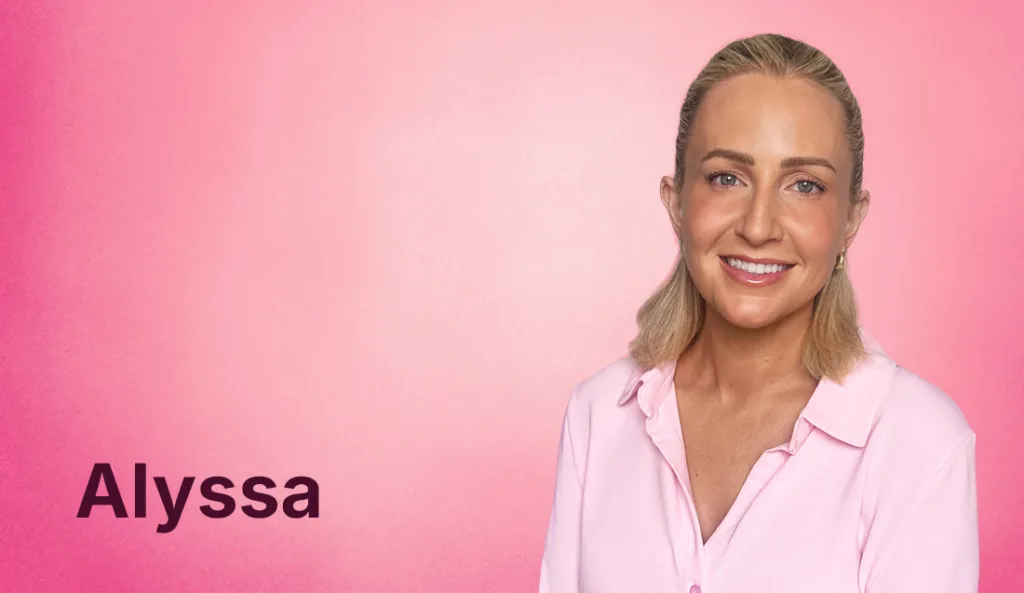
Alyssa Butts sat poolside on vacation in Arizona in 2024 when she received a phone call that changed her life. A few days prior, she underwent a planned biopsy for a lump on her breast, something doctors recommended after a mammogram. “I considered canceling the vacation so I could wait for the results at home, but ultimately decided it would be better to keep my mind occupied,” she recalls.
As a woman with dense breasts, she says the initial mammogram showed no visible findings.
So her provider recommended she get an ultrasound. Further imaging and a biopsy showed that the tumor was “much larger than originally thought” and positioned close to her chest wall, resulting in a change in diagnosis “to stage 2B invasive ductal carcinoma, requiring a more aggressive treatment plan than I had initially been told and prepared for,” she recalls.
Alyssa attributes research to helping catch her diagnosis early. “Without those additional diagnostic tools and the persistence of my care team, my cancer could have been underestimated, misdiagnosed, or even overlooked until it progressed to a more advanced stage,” she says.
Alyssa says that looking back, “everything after that phone call was a blur.” Nonstop doctors appointments, tests, and treatment became her day-to-day. “When you’re in the middle of a diagnosis and treatment, you’re focused on getting through each next step,” she says. “It wasn’t until I entered survivorship, when the appointments became less frequent and life started to feel somewhat normal again, that I truly began to process everything I had experienced.”
For Alyssa, chemotherapy and a bilateral mastectomy were a part of her treatment plan, but each impacted her in its own way. “Personally, I experienced several devastating setbacks and underwent multiple surgeries due to complications,” she says.
She attributes her incredible support system (which included her nurse navigator, family, friends, and fellow cancer patients and survivors, and her work family) for helping her get through it all.
Alyssa works for Ulta Beauty, a Breast Cancer Research Foundation (BCRF) partner, helping fund groundbreaking research. To date, Ulta Beauty and the Ulta Beauty Charitable Foundation have raised more than $67 million for BCRF, with a focus on advancing survivorship research. “I hope research and treatment continue to advance, improving outcomes, minimizing treatment side effects, and giving patients more confidence and hope throughout their journey,” she says. “My hope is that continued research will lead not only to more effective treatments, but also to safer, less physically and emotionally taxing ones.”
As for what she wants others to take away from her story: You are never too young or too healthy for a breast cancer diagnosis. “I was only 35 years old, I exercised regularly, had no known cancer-related genetic mutations, and no family history of breast cancer, yet I was still diagnosed,” she says.
Ultimately, listening to her body and advocating for herself were key in getting a diagnosis.
“If something doesn’t feel right, don’t ignore it or put off getting it checked. Trust your instincts, ask questions, seek additional opinions when needed, and be persistent in finding answers. Early detection and self-advocacy can make all the difference,” she says.