
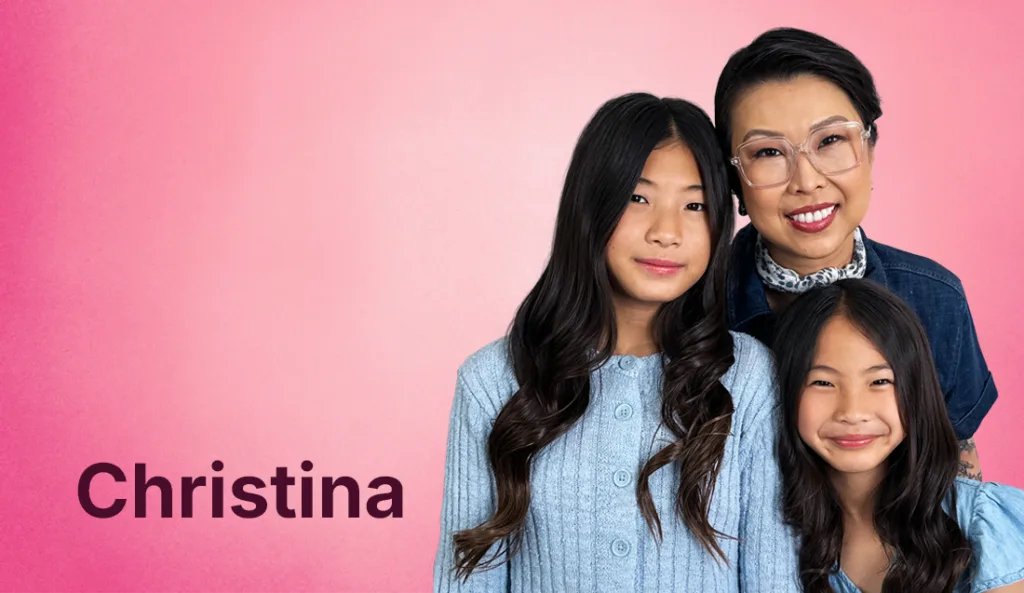
The mother of three felt a lump while breast feeding her newborn—it took months to receive a diagnosis.
At just 33, Christina Thammasen noticed a lump on her breast. Having just given birth, doctors assured the mother of three she was fine, and not to worry.
As a military dependent, she went to her doctor at the nearby military treatment hospital and was given instructions to go home and massage the lump. “I went home and did all the home remedies to relieve a clogged milk duct, but nothing worked and I went back to my primary care provider. I felt frustrated because no one was listening to me,” she recalls. She was sent back to her OBGYN, then transferred to a cancer clinic for further evaluation, but every doctor at every step expressed little concern. “They said: ‘Yep there’s definitely a lump but you know we’re not concerned because you’re young, you’re healthy, and have no family history of cancer. Why don’t you come back in 3 or 4 months if it hasn’t gone away by then.” Amid her quest to find a healthcare provider to take her concerns seriously, the mass quickly grew from the size of a blueberry, to a nickel, and eventually to the size of a golf ball within a few months.
Four months had passed from the time Christina first found her lump. During that time, life went on. She cared for her young children and worked as a Licensed Clinical Social Worker in CA., all while advocating for herself—with healthcare professionals and with her family. “Even when I shared my initial concerns with my husband and my mom, who is a nurse herself, they didn’t seem to take them as seriously as I felt they needed to,” she admits. She says she now understands that some of that misunderstanding most likely comes from family members not wanting to face the harsh reality of such a scary diagnosis. “When someone close to you gets diagnosed with cancer, people are forced to face their own mortality. Sometimes people deny or downplay a diagnosis because they haven’t come to terms with it. They don’t know how.”
It wasn’t until the fourth doctor, who was a woman, that she felt heard. “I think she [could] sense the urgency in my voice, see [the fear on] my face, that I was freaking out—even though I didn’t know how to say what I was feeling at the time.” The doctor finally ordered a mammogram, which led to a biopsy, and finally, a full body scan which showed that her breast cancer had spread to her lymph nodes, ribs, and liver. After meeting with several doctors and navigating insurance barriers, Christina was eventually diagnosed stage 4 HER2-positive, ER-positive, PR-negative de novo metastatic breast cancer at just 33 years old.
“The room turned black. I felt like I floated outside of my own body and I couldn’t hear anything else the Oncologist was saying to me after hearing I had stage 4 breast cancer” she painfully recalls.
The years following her diagnosis were filled with endless appointments, scans, radiation treatments, and ongoing changes to her chemotherapy regimen to try and keep the cancer controlled. “The scariest time in my journey was in 2022 when my oncologist and I learned my cancer stopped responding to treatments. It had quickly spread to my lungs and my brain, and we talked about enrolling in clinical trials. Anything that would give me more time to live.”
Looking back at where she was a few years ago, Christina emphasizes that you never know what someone is going through. “Illness doesn’t always look the same,” she says. “There was a time, especially in the beginning, where I did look sick. I was super bloated from all of the medications; I lost all my hair and eyelashes; my skin and nails peeled off; I gained 25 pounds—all the things that would make me look like a cancer patient.” But as time passed, people assumed she was better because she looked more like her pre-treatment self. “Over time, as I started to get used to my medications, or my side effects became more manageable and my hair started to grow back, a lot of people assumed that I was better because I looked better.” But that wasn’t the case.
“Every year younger patients like myself are living longer with this disease,” she says. “The face of cancer is changing, and so are the treatment options patients have. Cancer care is no longer a one-size-fits-all approach.” And that is thanks to scientists like those funded by the Breast Cancer Research Foundation (BCRF).
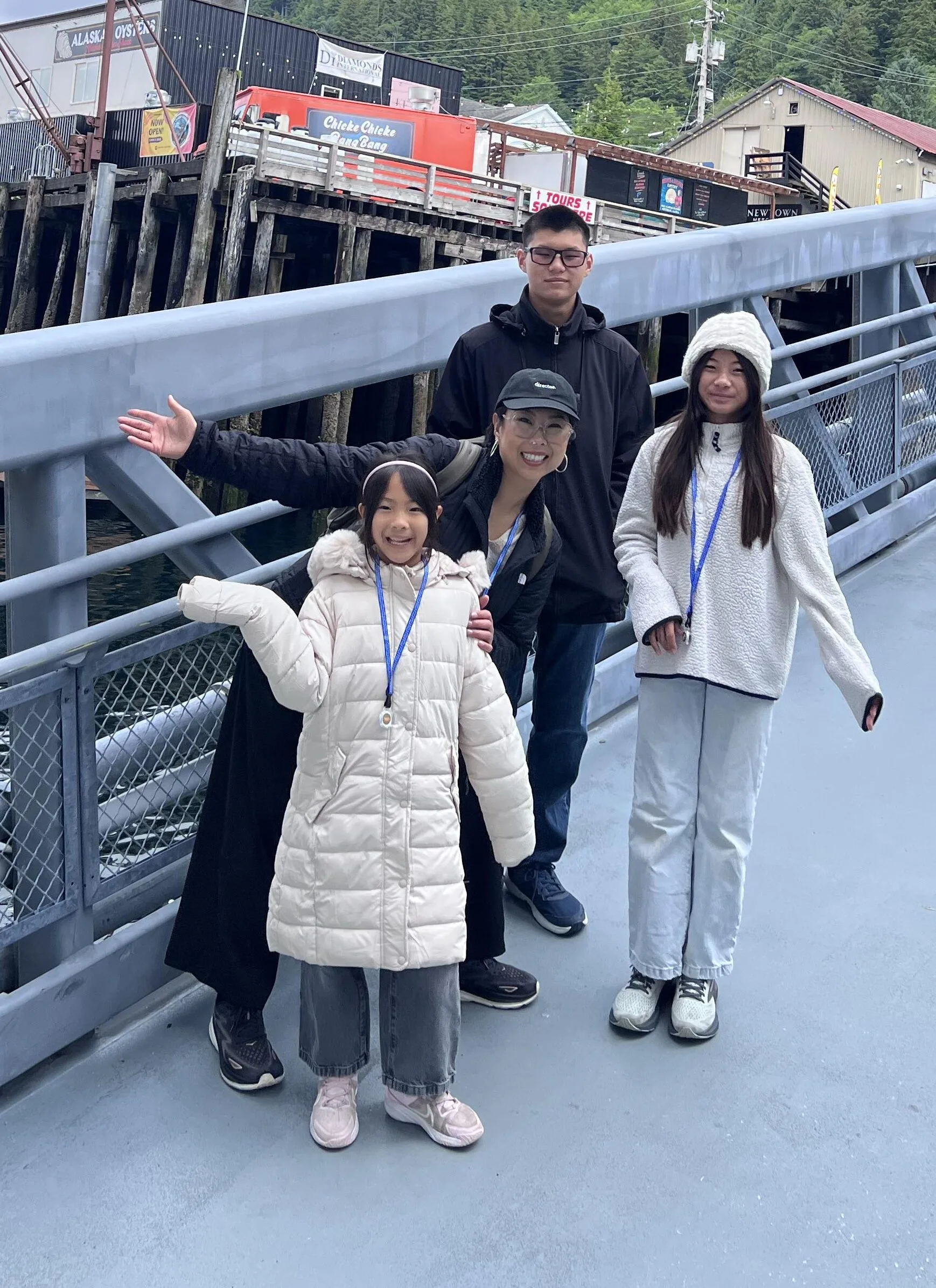
Christina hopes “that one day metastatic breast cancer will be seen more as a chronic health issue and not a terminal illness,” she says. Perhaps the biggest lesson cancer has taught Christina is how she parents her children. “Because of my diagnosis, I am so much more intentional with how I parent my three kids,” she says. “They’ve seen me lose my hair countless times. They’ve seen me sick in bed for weeks at a time and as a family we’ve endured more heartbreak than most people experience in a lifetime” she says. But, they’ve also seen her embrace life despite her physical limitations. “We love taking road trips and visiting new places. It’s all about creating lasting memories with my family.”
Ultimately, she wants them to see her live—amid the ups and downs. “I want to show them the full picture of what it looks like to live with stage 4 breast cancer. We laugh, we cry, we talk about hard things. I let them see me struggle, and I also let them see me laugh, be silly, and have fun. My kids are watching me. They’re taking notes. I hope one day my biggest legacy is how I’ve raised my children despite my disease.”