


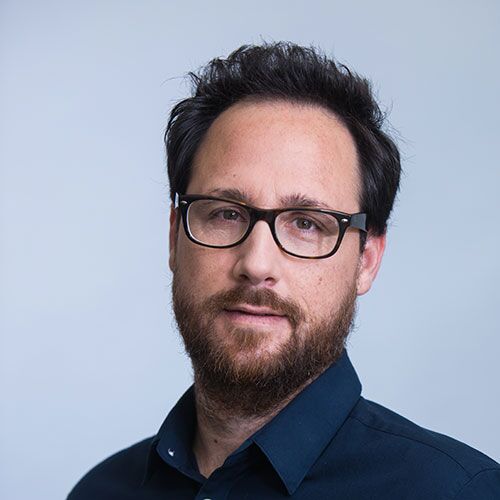
Titles and Affiliations
Associate Professor, Department of Human Genetics
Research Area
Exploring the origins of therapy resistance in estrogen receptor–positive breast cancer.
Impact
Many patients with estrogen receptor (ER)–positive breast cancer eventually stop responding to hormone therapy, which can cause the disease to return or spread. This may be due in part the malfunction of a complex called CoREST and SWI/SNF proteins. Together they are key controllers of how genes are switched on and off in cells, shaping cancer cell behavior. When these systems malfunction, they help tumors adapt and resist treatment. By uncovering how these proteins work together to fuel resistance, this research may lead to therapies that block their activity and improve survival for patients facing drug resistant ER-positive breast cancer.
What’s Next
Dr. Morey and his team aim to uncover how the CoREST-SWI/SNF system contributes to resistance through genetic changes in the estrogen pathway and SWI/SNF proteins. These studies will point to new treatment strategies designed to overcome resistance that could extend survival in patients with metastatic ER-positive breast cancer.
Biography
Lluis Morey, PhD is a Tenured Associate Professor at the Human Genetics Department at University of Miami and member of the Cancer Epigenetics Program at Sylvester Comprehensive Cancer Center. He completed his PhD studies in the laboratory of Dr. Luciano Di Croce, where he studied the role of the chromatin-remodeling complexes in leukemia. He then joined Dr. Kristian Helin’s laboratory where he studied the role of non-coding RNAs in ESCs, and in 2010 he joined Dr. Luciano Di Croce as staff scientist where he investigated the role of Polycomb complexes in ESCs. In 2016, he joined the University of Miami as Assistant Professor. Dr. Morey has been the recipient of multiple grants from the American Association for Cancer Research, American Cancer Society, V Foundation, METAvivor and NIH-NIGMS and NIH-NCI among others. His lab focuses on how chromatin modifying enzymes regulate oncogenic and developmental programs, and how perturbations of epigenetic pathways can be exploited for therapeutic interventions.