

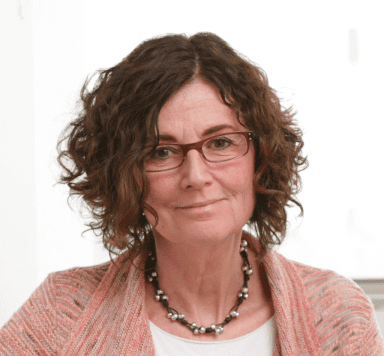
Titles and Affiliations
Leon Hess Professor
Director, Anderson Center for Cancer Research
Research area
Understanding how cancer cells survive DNA damage to continue growing and resist therapies.
Impact
Despite major advances in breast cancer detection and treatment, many unanswered questions remain about how the disease develops and why it becomes aggressive in some individuals. One critical area of investigation centers on the genetic instability found in most breast tumors, specifically changes to bundles of DNA called chromosomes that allow cancer cells to grow uncontrollably. Understanding how these changes arise, and how cancer cells survive despite them, may reveal new, more effective treatment strategies.
Dr. de Lange’s research focuses on the role of telomeres which are protective caps at the ends of chromosomes. In normal cells, telomeres prevent DNA damage, maintain genome stability, and limit the number of times a cell can divide. In early-stage breast cancer, telomeres become critically short because of rapid cell division, leading to genome instability. Later in cancer development, cells can restore telomeres allowing cancer cells to survive and multiply. By identifying key vulnerabilities in the way breast cancer cells manage genome instability, her research could lead to novel, targeted therapies.
Progress Thus Far
Dr. de Lange and her team are pursuing two major avenues of research. The first focuses on breast cancer cells with short telomeres. Building on their earlier finding that these cells are especially sensitive to disruption of a protein complex essential for telomere maintenance, the team confirmed more broadly that cells with short telomeres are more sensitive to the loss of certain genes than cells with normal-length telomeres. Because many breast cancer cells have relatively short telomeres, targeting these genes could selectively harm cancer cells while sparing healthy tissue. The second line of research investigates a process the team recently discovered, in which cancer cells attach new telomeres onto broken chromosomes, potentially helping them tolerate ongoing DNA damage. The team has built specialized breast cell models to study this process, known as neotelomere formation, and its role in helping cells survive genome instability.
What’s next
The team will use genetic screening techniques to identify which genes are specifically required for the survival of breast cancer cells with short telomeres, evaluating these genes as potential targets for new breast cancer therapies. Using their model system, they will also test whether neotelomere formation helps early-stage breast cancer cells escape the harmful effects of ongoing genome instability. Further, they will use newly developed telomere sequencing techniques to determine whether neotelomeres form during the development of breast cancer in patient samples. If their hypothesis is confirmed, blocking telomerase, the enzyme responsible for this process, could offer a new strategy to stop the growth of early-stage breast cancers before they become invasive.
Biography
Titia de Lange, PhD is the Leon Hess Professor and director of the Anderson Center for Cancer Research at The Rockefeller University. From 1985 to 1990, Dr. de Lange was a postdoctoral fellow in the laboratory of Dr. Harold Varmus at UCSF, where she was one of the first scientists to isolate human telomeres. Dr. de Lange joined The Rockefeller University in 1990 as an Assistant Professor and was appointed to tenured Professor in 1997. A major focus of Dr. de Lange’s research is to isolate the protein components in human telomeres and understand their roles in the cell. Several years ago, this work yielded an unexpected breakthrough, when Dr. de Lange and a collaborator at the UNC showed that the very tips of human telomeres are not linear, as had been assumed, but instead end in neatly finished loops. The discovery of telomere loops has sparked a reconsideration of many facets of telomere biology, including how these structures are involved in cancer and aging.
Dr. de Lange is an elected member of the Dutch Royal Academy of Sciences, the European Molecular Biology Organization, the US National Academy of Sciences, the Institute of Medicine, and the American Academy for Arts and Sciences. Among her awards are the inaugural Paul Marks Prize for Cancer Research from Memorial Sloan Kettering Cancer Center, the 2011 Vilcek Prize for Biomedical Science, and the Heineken Prize from the Royal Dutch Academy for Arts and Sciences. In 2013, she was one of the 11 inaugural recipients of the Breakthrough Prize in Life Sciences; she also received the 2014 Canada Gairdner International Award.

